I. Industry Pain Points
Most healthcare institutions still manage medical textiles using traditional manual methods: laundry-room staff visit departments to count items, manually sort and pack them, hand them over to external laundry providers for washing, and finally rely on manual counting again to distribute clean textiles. The drawbacks of this model are significant and seriously hinder refined hospital operations.
Persistently high IPC risk
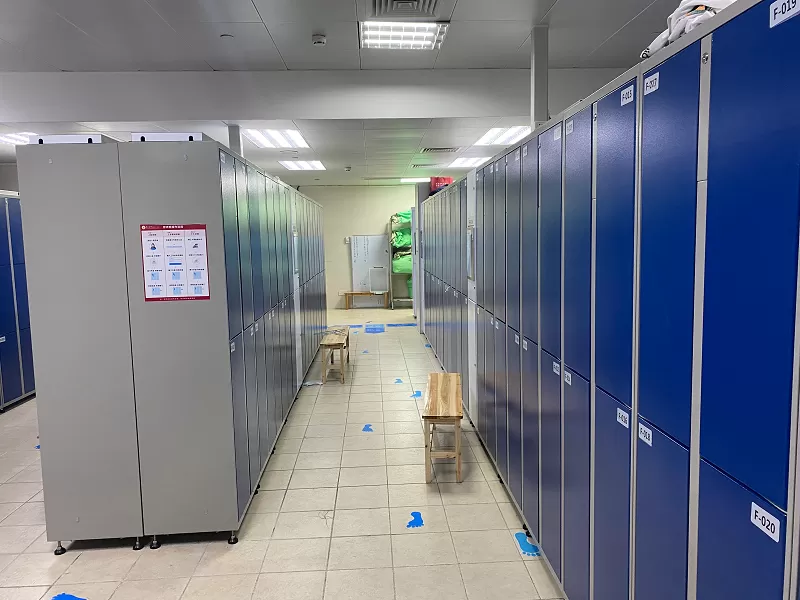
Infectious soiled textiles are exposed to public ward areas during collection. The entire process relies on manual handover, counting, and packing, resulting in high contact risk. Clean textile storage and issuance areas often lack enclosed, standardized management, creating hidden cross-infection risks.
Low operating efficiency and rising management costs
Manual counting is error-prone and handover workflows are lengthy. High labor input and complex coordination frequently lead to inconsistent records and difficult reconciliation, continuously increasing overall logistics management costs.
Difficulty in textile data analytics
Real-time inventory cannot be accurately counted, and key data such as lifecycle duration and washing frequency cannot be effectively captured. Without quantified data, it is difficult to support scientific decisions on procurement, loss write-offs, and inventory allocation.
Lack of end-to-end traceability
There is no systematic issue/return ledger across circulation steps. Damage, loss, and shrinkage occur frequently, but movement paths cannot be traced, making closed-loop, full-lifecycle management difficult.
II. Customized Solution
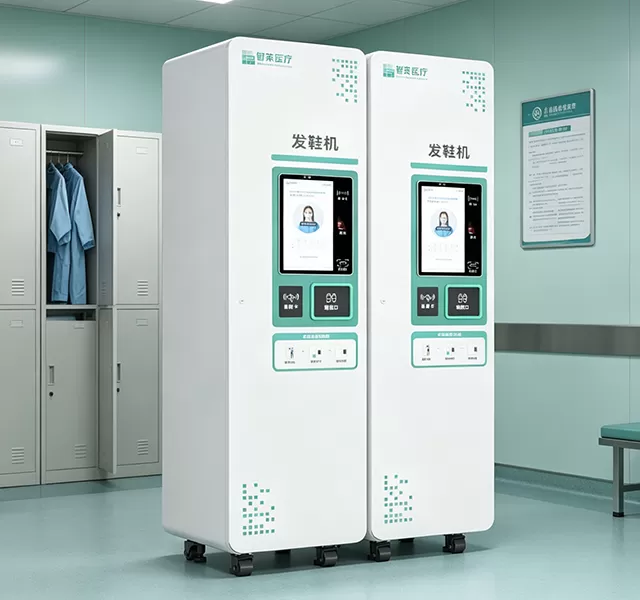
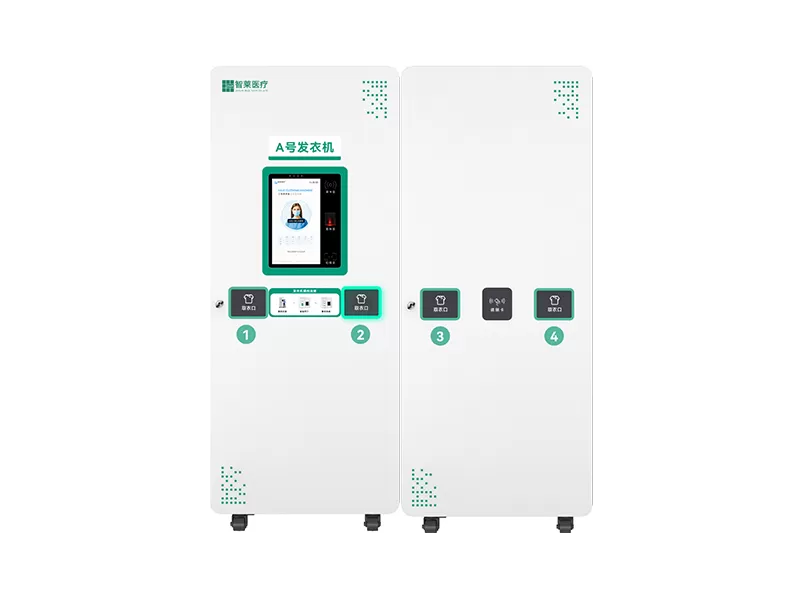
To address these challenges, ZHILAI MED provides an RFID Smart Medical Textile Management Solution. By sewing a dedicated RFID tag onto each textile item, every piece receives a unique identity. Together with smart collection devices, RFID inventory terminals, and a cloud management platform, plus standardized process optimization and institutionalized information management, the solution builds a closed-loop management system.
Powered by “one item, one code” tracking, the system records end-to-end data across collection, laundering, disinfection, dispensing, and issuance/usage, reducing direct human contact, lowering infection risk at the source, and enabling standardized, digital, and refined textile management.
III. Core Advantages
Efficient inventory counting for cost reduction and quality improvement
Using RFID handheld readers and batch inventory equipment, the system enables fast, bulk identification and counting—eliminating item-by-item manual counting, preventing missing/incorrect data, simplifying handovers, and reducing labor and management costs.
Zoned control to strengthen the IPC barrier
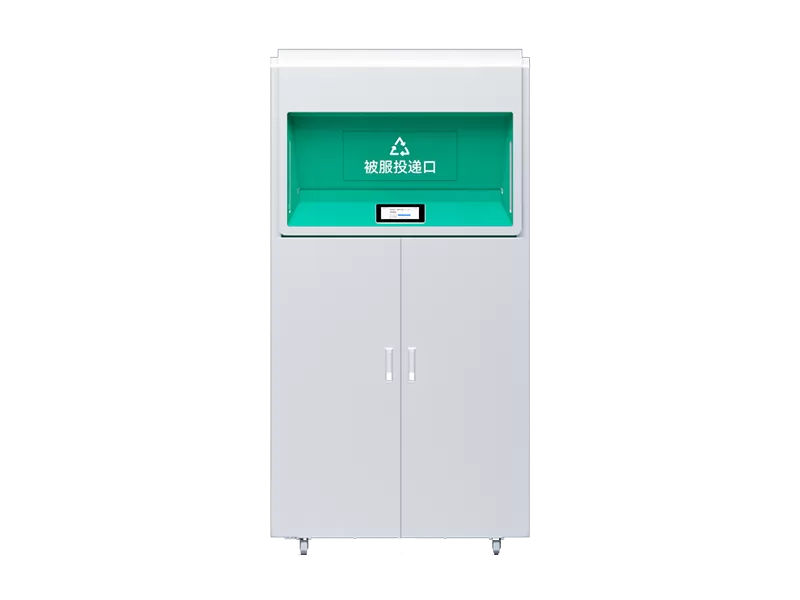
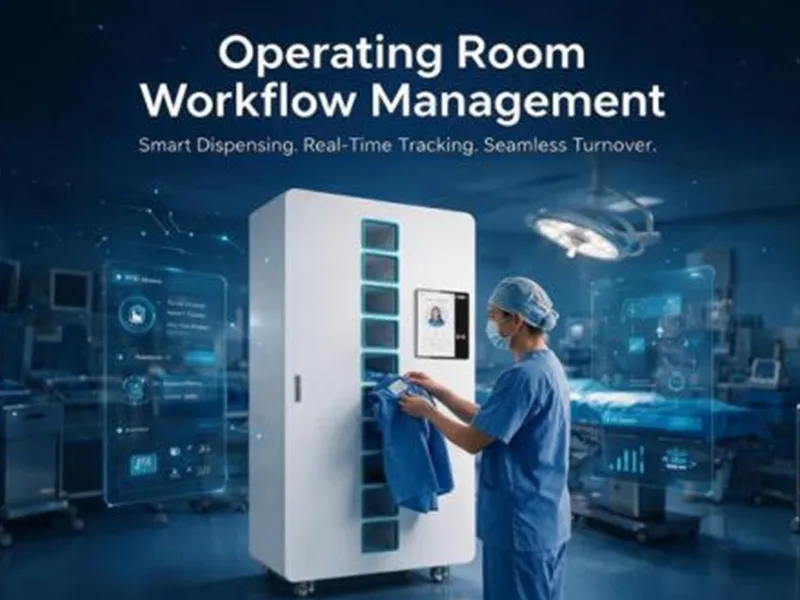
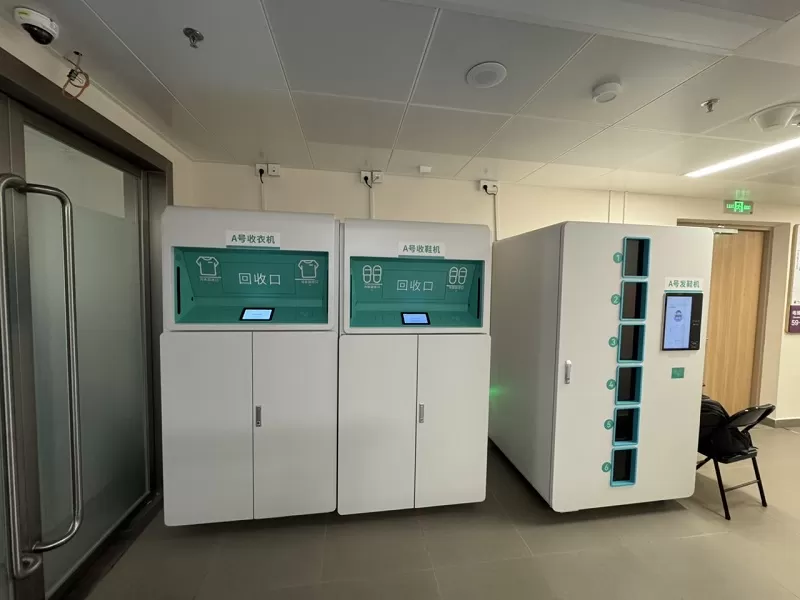
Smart collection terminals support sealed storage for soiled textiles and counting without unpacking. They enable classification, sealed storage, and transfer of general vs. infectious textiles, minimizing human–textile contact throughout the process and improving the hospital IPC environment.
End-to-end traceability with visible, controllable data
The system tracks each circulation node and usage status in real time. Backend data syncs instantly, records are clear and searchable, and textile loss, damage, and shrinkage are effectively reduced.
Full-lifecycle digital management
It automatically compiles multi-dimensional data such as wash counts, service life, and consumption, providing a scientific basis for procurement, rotation and retirement, and inventory allocation—supporting rational resource planning.
IV. Deployment Results
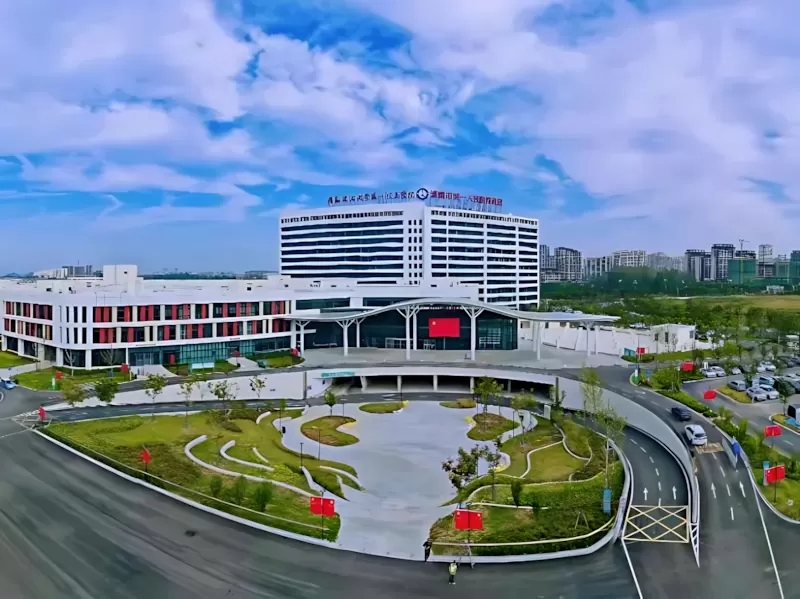
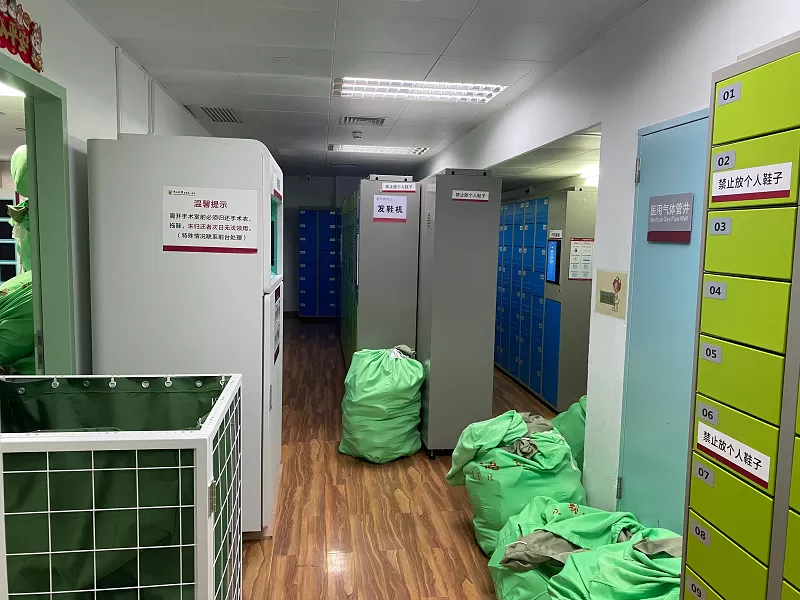
Backed by mature smart healthcare management technology and implementation experience, the solution has been deployed in large tertiary hospitals. At The First Affiliated Hospital of Sun Yat-sen University, the two parties began cooperation in 2023, gradually completing scaled deployment across multiple campuses and buildings.
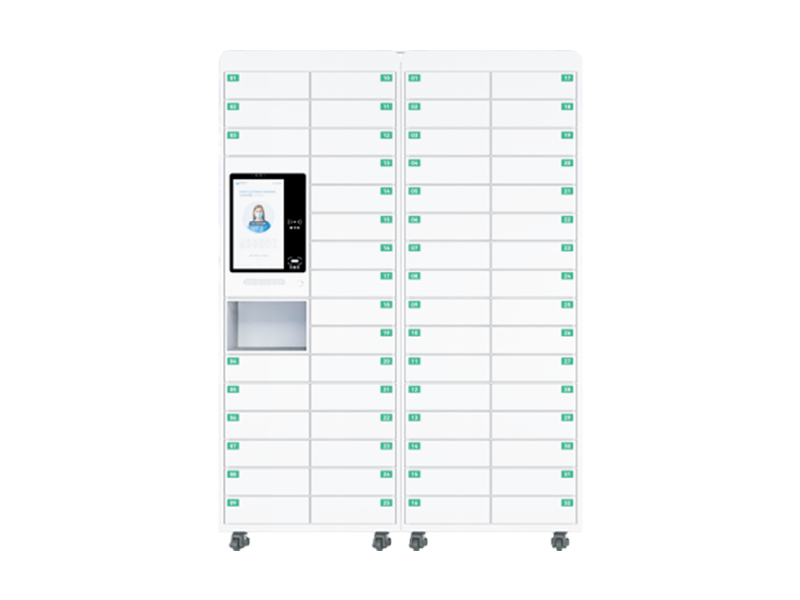
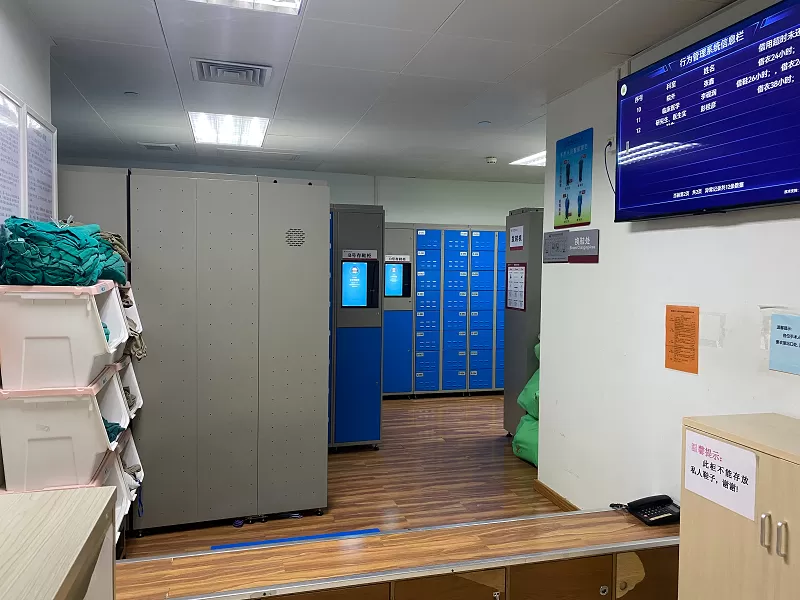
To date, the hospital has launched 30+ smart issue/return devices and 500+ smart storage cabinets, integrated with data dashboards and self-service terminals, and established a unified hospital-wide smart materials management network. Through standardized processes and interoperable data, it has comprehensively optimized textile and clinical supply circulation, reduced IPC risks, streamlined management workflows, and improved operational coordination efficiency.
The project has run continuously and stably, validating the solution’s practicality and reliability, and providing a replicable, scalable model for smart textile transformation, normalized IPC management, and logistics performance improvement in healthcare institutions.
FAQ 1
Q: How does ZHILAI MED’s Textile Management Solution effectively reduce hospital IPC risks?
A: The solution uses smart collection devices to enable sealed, categorized collection of infectious textiles and counting without unpacking, minimizing direct staff contact. With end-to-end closed-loop circulation, it standardizes enclosed storage and controlled issuance of clean textiles, preventing exposure and comprehensively mitigating cross-infection risks.
FAQ 2
Q: What efficiency improvements can RFID bring to textile management?
A: RFID tags give each textile item a unique identity. Together with smart inventory terminals, they replace manual counting with fast and accurate batch counting, simplifying handovers and reducing labor input. Circulation data is automatically synchronized to prevent record discrepancies, thereby lowering overall operational and management costs.
FAQ 3
Q: Can the system enable refined, full-lifecycle management of medical textiles?
A: Yes. The platform automatically records key data such as circulation history, wash counts, and service time, and visualizes inventory status in real time. It supports rapid traceability for damaged or missing textiles and provides accurate data for procurement and retirement/replacement planning—enabling long-term, digital management.