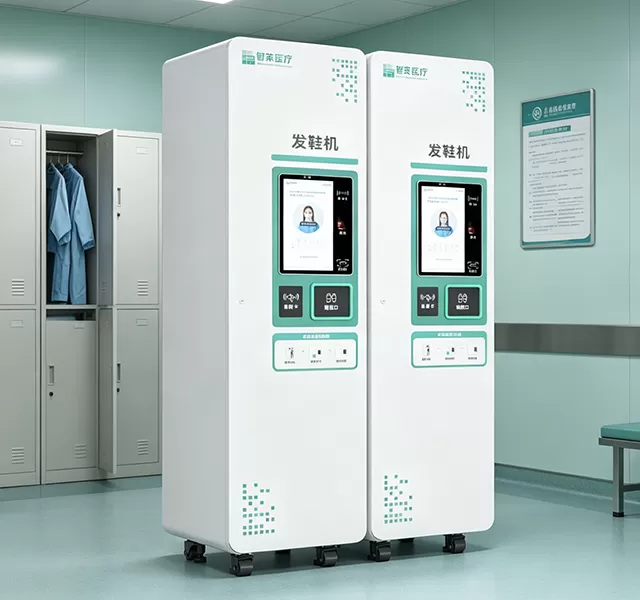
LOCKER ALLOCATION GUIDE Fixed vs Shared Shoe Locker Allocation
A hospital does not always need one permanently assigned shoe locker for every employee. ZHILAI MED smart shoe changing lockers support both fixed allocation and shared allocation, allowing hospitals to configure locker access according to staff roles, shift patterns, changing-room occupancy and storage policies.
FIXED ALLOCATION
One Locker Assigned to One User
In a fixed allocation model, a specific compartment remains associated with the same authorized user according to the hospital's configured management policy.
Best suited for: Permanent staff requiring predictable personal storage
Departments with relatively stable staffing
Users who need the same compartment across multiple shifts
Roles requiring clearly assigned storage responsibility
Areas where locker availability is not severely constrained
Main advantage: Simple ownership and predictable access because the employee knows which compartment is assigned to them.
SHARED ALLOCATION
Available Lockers Allocated from a Shared Pool
In a shared or floating allocation model, authorized users receive an available compartment according to the configured allocation rules rather than keeping the same locker permanently.
Best suited for: Rotating doctors, nurses and clinical personnel
Operating rooms with multiple staff shifts
Changing rooms with limited available floor space
Temporary or visiting personnel
Facilities seeking higher locker utilization
Main advantage: Compartments can serve different users at different times, helping reduce permanently idle locker capacity.
| Planning Factor | Fixed Allocation | Shared Allocation |
|---|
| Compartment ownership | Assigned to a designated user | Allocated from an available shared pool |
| Locker quantity basis | Number of permanently assigned users | Peak simultaneous occupancy plus reserve |
| Best staffing pattern | Stable or permanent workforce | Shift-based and rotating workforce |
| Space efficiency | Lower when many assigned users are absent | Potentially higher through compartment reuse |
| User experience | Familiar and predictable | Flexible; compartment may change between uses |
| Typical hospital use | Permanently assigned employees or specific roles | Operating-room shifts, rotating teams and temporary staff |
A Hybrid Allocation Model Often Works Best
Hospitals do not necessarily need to choose only one allocation method. A changing area can combine permanently assigned compartments for specific employees with a shared locker pool for rotating staff, temporary users or departments with changing shift patterns.
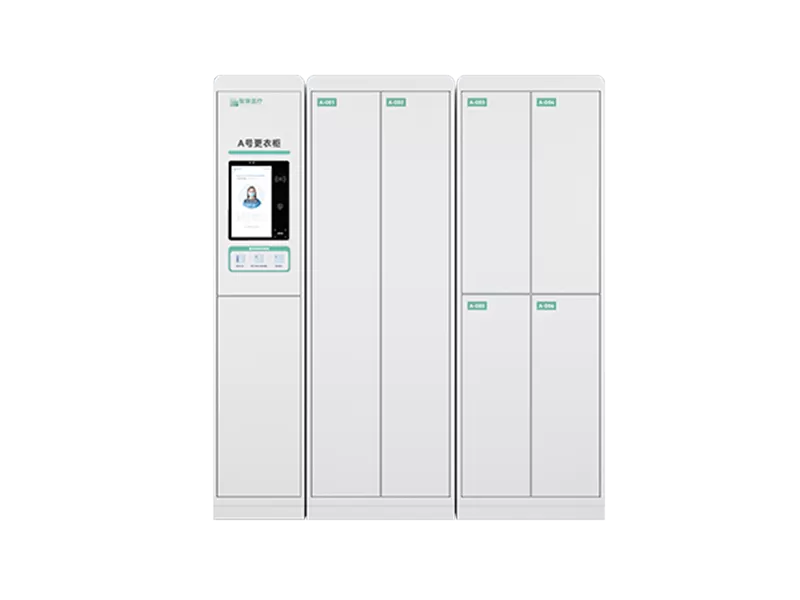
ZHILAI MED smart shoe changing lockers support flexible modular configurations, allowing the cabinet quantity and compartment structure to be planned according to actual staff numbers and installation space.
How Many Shoe Lockers Does a Hospital Need?
Do not calculate shared locker capacity from the total employee list. Start with the number of people who are expected to use the changing area at the same time.
Shared Locker Requirement
=
Peak Simultaneous Users + Shift-Overlap Allowance + Temporary Users + Operational Reserve
Fixed lockers should then be added separately for employees or roles that require permanent assignment. Also confirm the compartment size needed for footwear and personal items before deciding between the available 8-, 10-, 12-, 16-, 18-, 20- and 24-door cabinet configurations.
For a more detailed approach to calculating fixed, shared and hybrid locker quantities, see our Hospital Staff Locker Planning Guide .
FAQ Frequently Asked Questions About Smart Shoe Changing Lockers
These questions cover allocation methods, authentication, compartment configuration, offline operation and planning considerations for hospital shoe changing areas.
What is a smart shoe changing locker?
A smart shoe changing locker is an electronically controlled storage system used to manage staff footwear and related personal storage in hospital changing areas. It combines secure compartments with identity verification, electronic locks, door-status monitoring and software-based allocation management.
What is the difference between fixed and shared shoe locker allocation?
With fixed allocation, a designated compartment remains assigned to a specific user according to the configured policy. With shared allocation, an authorized user receives an available compartment from a common locker pool. Shared allocation is especially useful where staff work in rotating shifts.
Which allocation method is better for hospital operating rooms?
It depends on staffing patterns. Fixed lockers may be appropriate for permanent users who require consistent storage, while shared lockers can improve utilization for rotating doctors, nurses and temporary staff. Many hospitals can use a hybrid model combining both approaches.
How can hospital staff open a smart shoe locker?
The current smart shoe changing locker supports multiple identity-verification options, including facial recognition, IC card authentication and account/password access. The final authentication method should be configured according to the hospital's security and workflow requirements.
Can the smart shoe changing locker operate if the network is unavailable?
Yes. The system supports offline operation during a network interruption and can upload data after connectivity is restored. Hospitals should still test the exact offline authentication, opening and data-synchronization workflow before deployment.
What happens during a power failure?
The product includes an emergency operating plan. The current specification supports manual emergency unlocking and backup power designed to maintain operation for at least one hour after a power interruption. The hospital should include emergency-access testing in its commissioning process.
How many compartments can a smart shoe changing locker have?
ZHILAI MED offers several compartment configurations, including 8-, 10-, 12-, 16-, 18-, 20- and 24-door layouts. Because compartment height changes with the number of doors, the final configuration should be selected according to the footwear or personal items being stored as well as the number of users.
Can multiple shoe locker cabinets be combined into one system?
Yes. The smart shoe changing locker uses a modular design, allowing main and auxiliary cabinets to be combined according to staff numbers, required compartment capacity and available installation space. The final cabinet quantity should be confirmed during project planning.
How does the system know whether a locker door has been closed properly?
The electronic locking system supports door-status detection. If a door is not properly closed, the system can provide an alert according to the configured workflow, helping reduce unsecured compartments in busy changing areas.
What information should a hospital provide before requesting a shoe locker proposal?
Provide the number of permanent and rotating users, peak simultaneous occupancy, shift-overlap patterns, preferred fixed or shared allocation policy, footwear dimensions, available installation space, required authentication method, network conditions and any emergency-access or software-integration requirements.
Managing both hospital workwear and footwear? Explore the Workwear and Shoe Management Solution to connect changing lockers with automated garment dispensing, shoe dispensing and return workflows.