Operating rooms (ORs) are among the most critical and resource-intensive areas of any hospital. Every surgical procedure depends on coordinated workflows involving surgeons, nurses, anesthesiologists, support staff, surgical garments, medical textiles, and sterile supplies. Even minor delays or process errors can impact surgical efficiency, increase operational costs, and potentially compromise patient safety.
As hospitals continue their digital transformation, improving operating room workflow management has become a strategic priority. Modern healthcare facilities are looking beyond traditional manual processes and adopting intelligent technologies that streamline operations, enhance traceability, and support infection prevention.
Technologies such as RFID, IoT, smart dispensing systems, and centralized management platforms are enabling hospitals to automate routine tasks while providing real-time visibility into staff activities and garment circulation. Rather than relying on paper records or manual supervision, hospitals can now build a data-driven operating room environment where every movement is recorded and every process is traceable.
This article explores the challenges of traditional operating room workflows, the technologies driving modern workflow management, and how hospitals can build a smarter, safer, and more efficient operating room.
Why Operating Room Workflow Management Matters
Although operating rooms occupy only a small portion of a hospital's physical space, they account for a significant percentage of hospital revenue while demanding the highest standards of safety and efficiency.
Managing an operating room involves far more than scheduling surgeries. Every day, hospitals must coordinate:
Medical staff access authorization
Surgical scrub and footwear distribution
Sterile garment collection
Linen circulation
Inventory management
Infection prevention procedures
Compliance documentation
When these processes rely heavily on manual operations, hospitals often experience delays, unnecessary labor costs, inventory inaccuracies, and limited visibility into workflow performance.
Effective operating room workflow management ensures that the right people have access to the right resources at the right time while maintaining complete operational transparency. By digitizing critical processes, hospitals can improve staff productivity, reduce administrative workload, and support higher standards of patient care.
Common Challenges in Traditional Operating Room Workflows
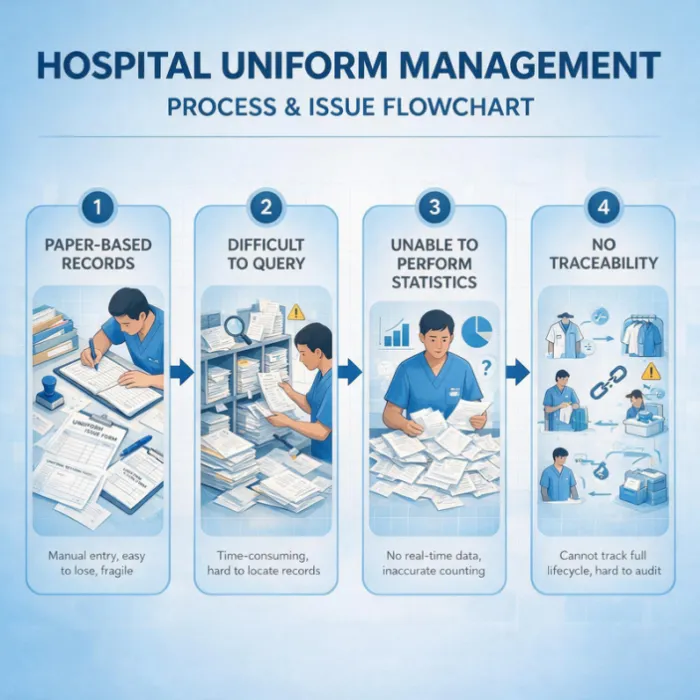
Despite advances in hospital information systems, many healthcare facilities still rely on manual operating room management practices.
Manual Staff Access
Many hospitals continue to verify staff identities through ID cards, manual registration, or security personnel. These methods are time-consuming and make it difficult to monitor staff movement or enforce access permissions consistently. Temporary staff, trainees, contractors, and visiting physicians may require different access rights, creating additional administrative complexity.
Paper-Based Garment Distribution
Surgical scrubs and footwear are often distributed manually. Staff members record garment usage on paper or in spreadsheets, making the process inefficient and prone to human error.Without automated tracking, hospitals may experience:
Traditional workflows provide limited visibility into garment circulation.
Hospitals often struggle to answer questions such as:
Incomplete records reduce accountability and make investigations more difficult during audits or infection control reviews.
High Administrative Workload
Nursing managers and logistics teams spend considerable time distributing garments, checking inventory, and maintaining records. These repetitive tasks reduce the time available for higher-value clinical and operational responsibilities.
What Is Smart Operating Room Workflow Management?
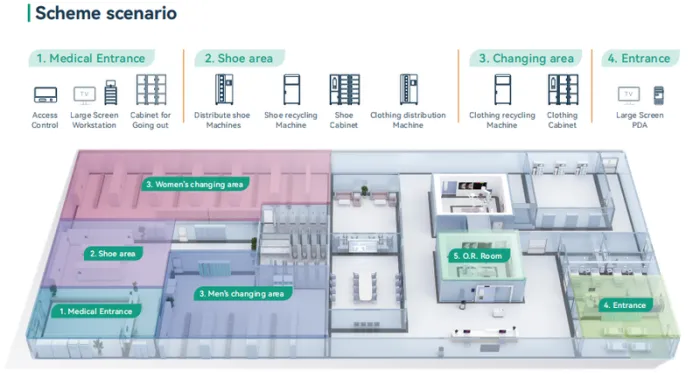
Smart Operating Room Workflow Management integrates intelligent hardware, RFID technology, software platforms, and automation to create a connected workflow throughout the operating room.
Instead of managing staff, garments, and inventory separately, the system connects every stage into a unified digital process.
A typical workflow includes:
Staff identity authentication
Access authorization
Automatic scrub dispensing
Operating room entry
Surgical procedure
Garment return
Laundry processing
Inventory update
Data reporting and analytics
Every transaction is automatically recorded, creating a complete digital history without requiring manual documentation.
Technologies Driving Modern Operating Room Workflow
RFID Technology
RFID (Radio Frequency Identification) is one of the most important technologies in modern hospital workflow management. Each surgical garment can be assigned a unique RFID tag containing digital identification information. RFID readers automatically recognize garments during dispensing, collection, laundering, and storage.
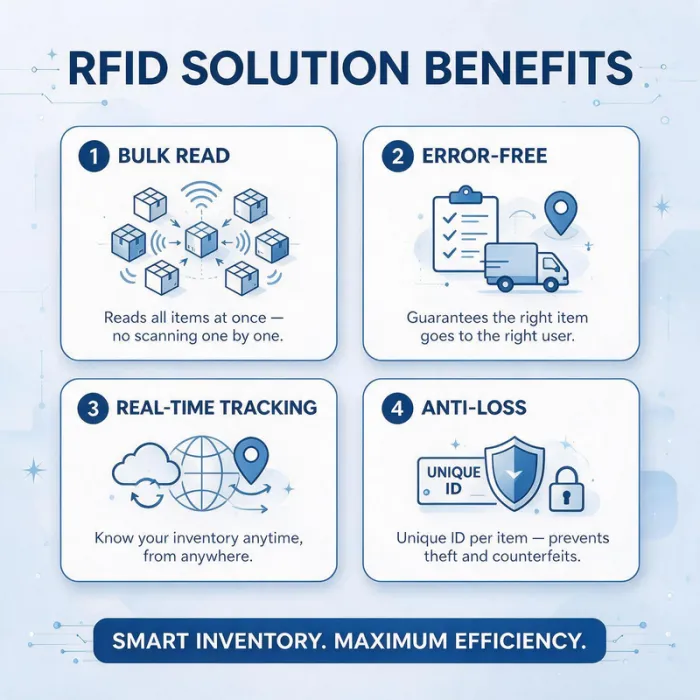
Compared with barcode scanning, RFID allows faster, contactless identification and supports bulk reading of multiple items simultaneously. Hospitals gain real-time visibility into garment locations, circulation status, and usage history.
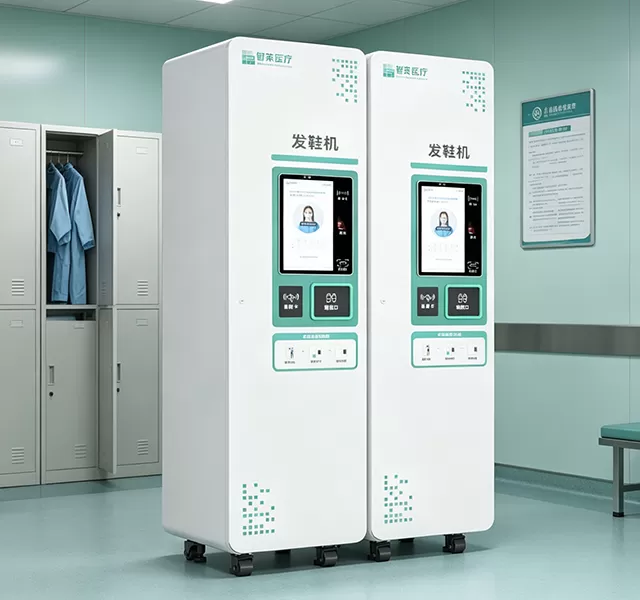
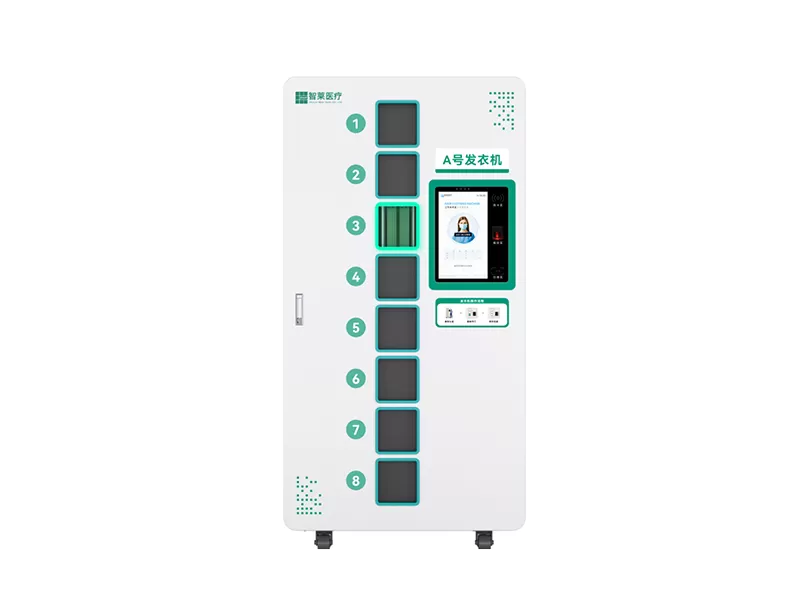
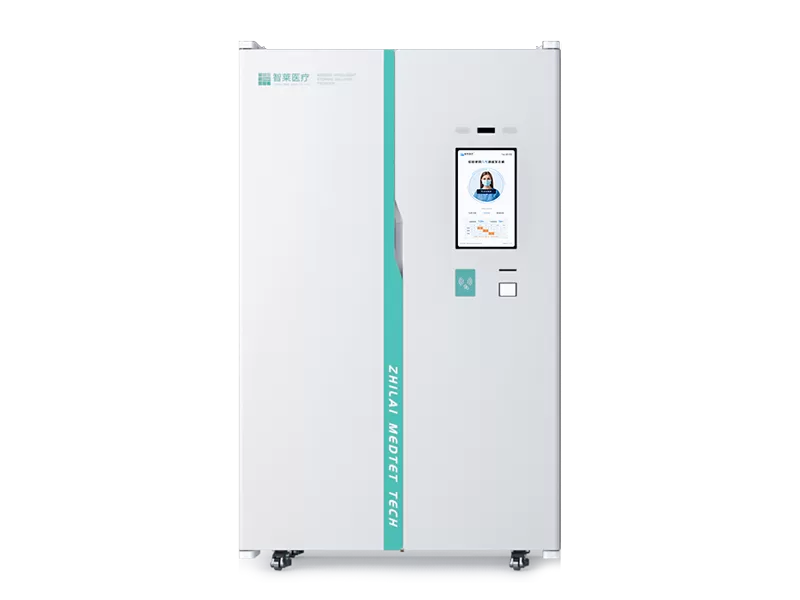
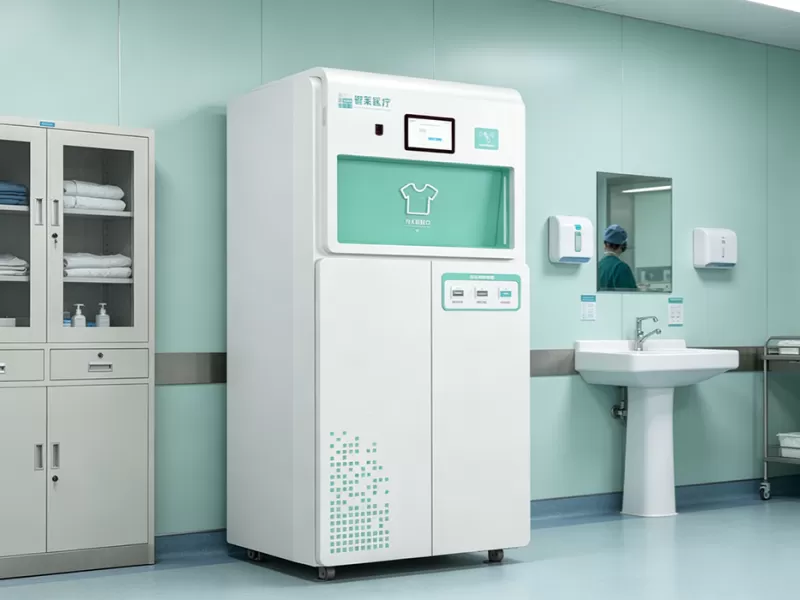
Automated scrub dispensing cabinets replace manual garment distribution. After staff authentication using an employee badge, biometric identification, or other approved methods, the system automatically authorizes garment collection according to predefined hospital policies.
Every dispensing transaction is recorded instantly, eliminating manual registration.
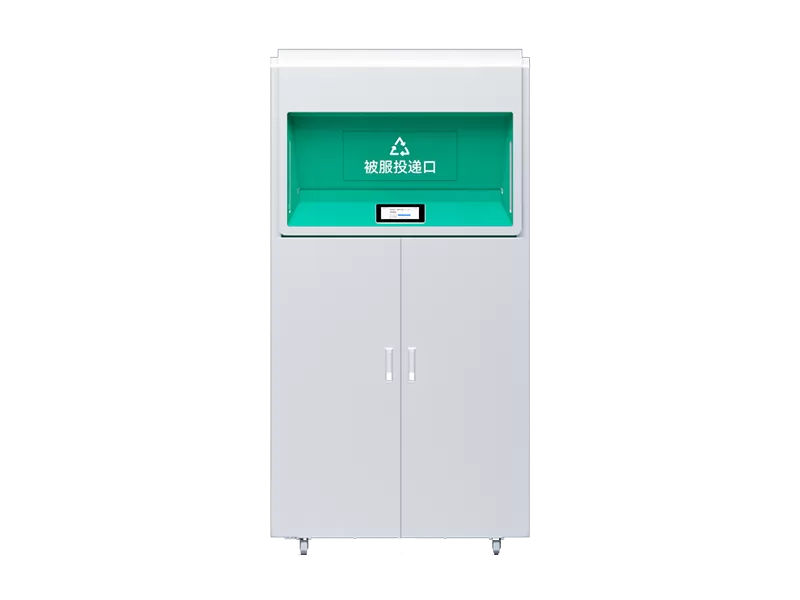
Return cabinets automatically record returned garments using RFID technology. Returned scrubs are immediately added to the digital workflow, allowing hospitals to monitor laundry status and garment circulation without manual counting.
Centralized Management Platform
A centralized software platform connects all intelligent devices across the hospital.
Administrators can monitor:
Staff usage records
Garment inventory
Cabinet status
Laundry circulation
Equipment health
Operational reports
Real-time dashboards enable faster decision-making and better resource allocation.

Improved Operational Efficiency
Automation significantly reduces the time required for garment distribution and collection.
Medical staff spend less time waiting for uniforms and more time focusing on patient care.
Enhanced Infection Prevention
Controlled garment circulation helps hospitals maintain standardized operating procedures.
Digital records also support infection prevention teams during inspections and quality reviews.
Complete Garment Traceability
Every garment movement—from dispensing to return and laundering—is automatically recorded.Hospitals can quickly identify missing items, analyze circulation patterns, and reduce unnecessary losses.
Better Staff Accountability
Each transaction is linked to an authenticated user, improving responsibility and reducing unauthorized garment usage.
Data-Driven Management
Historical data provides valuable insights into:
These analytics help hospital managers optimize resources and improve long-term planning.
Key Components of a Smart Operating Room Workflow Solution
A comprehensive operating room workflow management solution typically includes:
Smart Scrub Dispensing Cabinets
Smart Return Cabinets
RFID-enabled Garments
RFID Readers and Antennas
Staff Authentication System
Access Control Integration
Central Management Software
Inventory Management Platform
Reporting and Analytics Dashboard
Together, these components establish a closed-loop workflow that connects people, garments, equipment, and operational data.
Choosing the Right Operating Room Workflow Solution
Hospitals should evaluate several factors when selecting a workflow management provider.
First, choose a supplier with proven experience in healthcare automation rather than general smart locker manufacturing. Healthcare environments require strict standards for reliability, hygiene, and long-term operation.
Second, ensure the solution supports integration with existing hospital information systems. Compatibility with hospital workflows minimizes disruption during implementation.
Third, consider customization capabilities. Every hospital has unique workflows, operating room layouts, and management policies. Flexible system configuration is essential for achieving the best results.
Finally, evaluate after-sales service, technical support, and implementation experience. Successful deployment depends not only on the technology itself but also on professional planning, installation, training, and ongoing maintenance.
The Future of Operating Room Workflow Management
Healthcare is moving toward smarter, more connected operating rooms. Future operating room workflow management systems will increasingly combine RFID, IoT, artificial intelligence, cloud computing, and predictive analytics to deliver greater operational intelligence.
Hospitals will gain deeper visibility into staff movement, garment utilization, inventory demand, and workflow performance through real-time dashboards and automated reporting.
As digital transformation accelerates, workflow automation will become a standard component of modern surgical environments rather than an optional upgrade.
Conclusion
Operating Room Workflow Management is no longer simply about improving efficiency—it is about creating a safer, more transparent, and data-driven surgical environment.
By integrating RFID technology, smart dispensing systems, intelligent return management, and centralized software platforms, hospitals can streamline garment circulation, improve staff accountability, strengthen infection prevention, and optimize daily operations.
For healthcare organizations pursuing smarter operating rooms and sustainable digital transformation, investing in an integrated workflow management solution provides long-term operational value. As hospitals continue to modernize, intelligent workflow management will play an increasingly important role in supporting high-quality patient care, efficient resource utilization, and continuous operational improvement.