TECHNICAL DATA Specification of Automated Rotary Scrub Dispenser
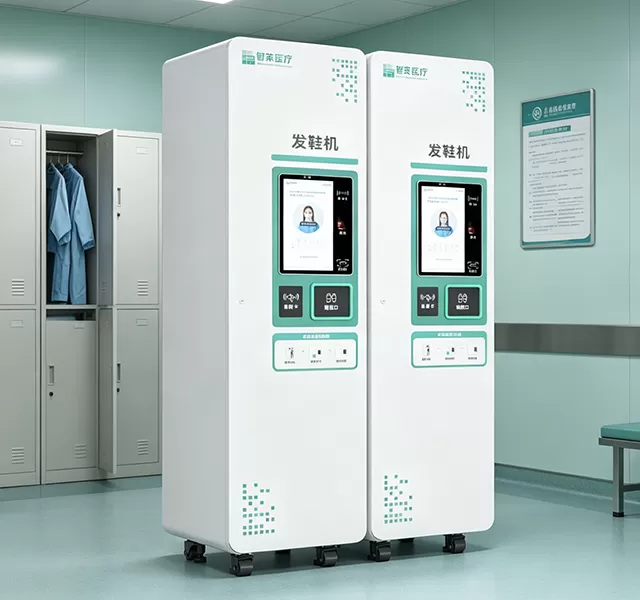
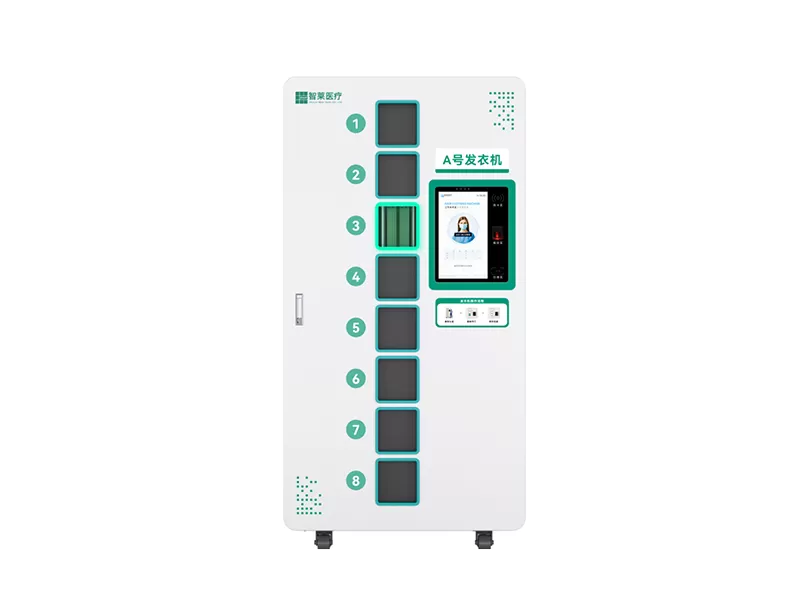
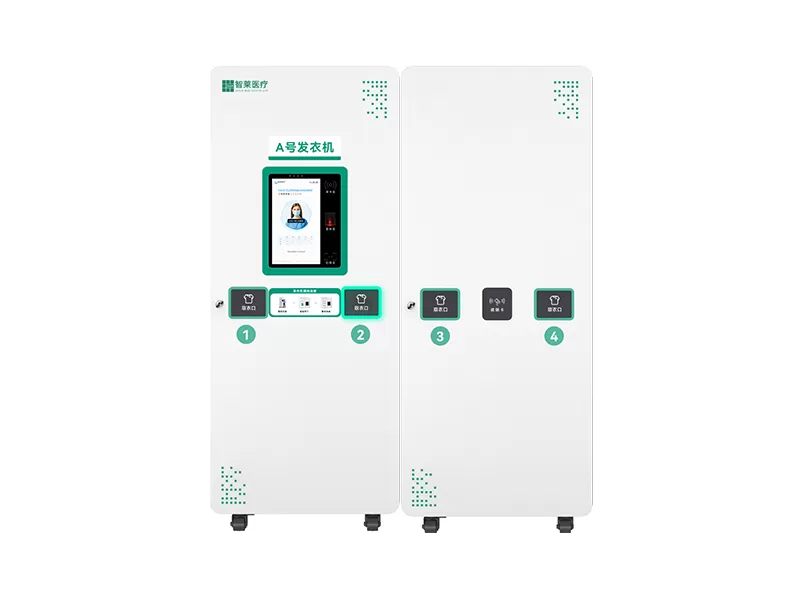
The automated rotary scrub dispenser combines controlled staff authentication, rolled-scrub loading, elevated horizontal dispensing ports and emergency offline operation for hospital scrub distribution.
| Component | Detailed Specifications |
|---|
| Operation Display | 15.6-inch touchscreen |
| Identity Authentication | Facial recognition, IC card and account/password authentication |
| Audio Module | Speaker integrated inside the display |
| Network Connection | Wired network, Wi-Fi |
| Dimensions (W × D × H) | 178 × 600 × 2096 mm |
| Cabinet Material | High-strength galvanized steel; 1.5 mm thick spangle-free galvanized sheet; matte textured surface; electrophoretic coating plus powder coating; solid structure; wear-resistant and corrosion-resistant exterior. |
| Unit Configuration | Single unit with two horizontal dispensing ports positioned more than 1 m above the floor. |
| Storage Capacity | 120 sets |
| Loading Method | Clean scrubs are manually rolled and loaded without outer packaging. Each scrub access port is equipped with an anti-pinch function. |
| Emergency Plan | Supports offline dispensing and local transaction records during network outages, with automatic data synchronization after reconnection. Supports operation for more than 1 hour during a power outage. |
| Inventory Reminder | When stock for any garment size falls below its preset threshold, the interface displays a low-stock reminder to prompt timely replenishment. |
DAILY SCRUB ACCESS Why the Rotary Format Matters for Daily Scrub Access
Hospital scrub distribution is not only a storage problem. Staff may need clean garments repeatedly during shift changes, before procedures and after replacing contaminated workwear. The dispensing point therefore needs to support frequent access without turning the changing area into an open garment store.
This rotary scrub dispenser places clean garments inside a controlled dispensing system and presents them through dedicated horizontal access ports after staff authentication. The design separates the staff collection point from the replenishment process and makes the dispenser more suitable for controlled hospital changing-room workflows than unrestricted open shelving.
GARMENT PREPARATION Rolled Scrubs vs Folded Garments: Why the Loading Method Matters
This model is designed around manually rolled scrubs rather than individually packaged garments. That preparation method should be considered when hospitals design their laundry-to-dispenser workflow.
| Workflow Factor | Rolled Scrub Workflow | Typical Folded-Garment Workflow |
|---|
| Garment Preparation | Scrubs are manually rolled before loading. | Garments are folded before being placed into the dispensing system. |
| Outer Packaging | No outer packaging is required for this model. | Depends on the garment-management system and project workflow. |
| Laundry Preparation | Laundry or replenishment staff need a consistent rolling process before loading. | Laundry teams prepare garments according to the folding requirements of the selected dispenser. |
| Best Planning Question | Can the laundry team maintain a consistent rolled-scrub replenishment process? | Does the selected dispenser require specific folding, stacking or packaging preparation? |
The loading method should match the laundry workflow The right dispensing system is not determined by cabinet capacity alone. Hospitals should also consider how clean garments leave the laundry, how staff prepare them for loading and how frequently replenishment is performed.
ERGONOMIC ACCESS Why Are the Dispensing Ports Positioned Above 1 Meter?
The unit uses two horizontal dispensing ports positioned more than 1 meter above the floor. This allows hospital staff to retrieve clean scrubs from approximately waist-level height instead of repeatedly reaching down toward a low collection opening.
This may appear to be a small mechanical detail, but it becomes more relevant in busy changing areas where employees may collect garments many times throughout the day.
TWO ACCESS POINTS Two horizontal dispensing ports
COLLECTION HEIGHT More than 1 m above the floor
ACCESS SAFETY Anti-pinch function at scrub access ports
BUSINESS CONTINUITY What Happens During Network or Power Interruptions?
Hospital changing rooms cannot always stop garment distribution simply because network communication is temporarily unavailable. For that reason, emergency operation should be evaluated as part of the scrub-dispenser selection process.
NETWORK INTERRUPTION Dispensing Can Continue Offline
During a network outage, dispensing and transaction records can be completed offline. After network connectivity is restored, locally stored data is automatically synchronized.
POWER INTERRUPTION More Than 1 Hour of Emergency Operation
The published emergency configuration supports continued operation for more than one hour during a power outage, helping maintain access to clean workwear during short-term interruptions.
Project planning note: hospitals should confirm local emergency-power requirements, network architecture and system-integration requirements during project design rather than assuming every installation uses the same infrastructure.
INVENTORY CONTROL How Low-Stock Alerts Support Daily Scrub Replenishment
A scrub dispenser can still create operational problems if staff only discover a shortage after a popular size has already run out. This model allows stock thresholds to be configured by garment size so replenishment teams can receive an earlier warning.
01 Set Threshold
02 Monitor Size Stock
03 Trigger Low-Stock Alert
04 Prepare Replenishment
05 Reload Rolled Scrubs
Hospitals planning dispenser capacity should also consider peak demand and replenishment frequency. For a more detailed approach, see the Hospital Scrub Dispenser Sizing Guide.
WORKFLOW COMPARISON Automated Rotary Scrub Dispenser vs Manual Scrub Shelving
Open shelves may be sufficient for simple garment storage, but hospitals that require authenticated access and more structured replenishment may need a controlled dispensing workflow.
| Operational Factor | Manual Scrub Shelving | Automated Rotary Scrub Dispenser |
|---|
| User Access | Usually depends on room-level access control or manual supervision. | Facial recognition, IC card or account/password authentication. |
| Garment Collection | Staff manually select garments from shelves. | Garments are issued through dedicated horizontal dispensing ports. |
| Low-Stock Visibility | Usually requires staff to check remaining stock manually. | Preset stock thresholds can generate replenishment reminders. |
| Network Interruption | Not generally dependent on a digital network. | Supports offline dispensing and later data synchronization. |
| Best Fit | Simple environments where manual garment distribution is sufficient. | Hospitals requiring controlled staff access, inventory alerts and self-service scrub distribution. |
HOSPITAL DEPLOYMENT Typical Deployment Locations in Hospital Changing Areas
Placement should follow the hospital's changing sequence and clean-garment circulation path. The dispenser should be easy for authorized staff to reach without creating unnecessary traffic through laundry or storage areas.
OR Staff Changing Area
Position near the clean side of the operating-room changing workflow for controlled access to clean scrubs.
Department Changing Room
Suitable where individual departments want staff to collect clean garments closer to their work area.
Surgical Center Clean Zone
Can support controlled garment distribution where surgical staff require standardized clean workwear.
Staff-Only Scrub Corridor
Can be placed along an authorized staff circulation route when the hospital wants to separate garment access from the laundry work area.
FAQ Frequently Asked Questions About Rotary Scrub Dispensing
Why are scrubs rolled before loading?
This model uses a rolled-scrub loading method. Clean garments are manually rolled before replenishment so they match the machine's specified loading workflow.
Do the scrubs require outer packaging?
No. According to the specified loading method, clean scrubs can be manually rolled and loaded without outer packaging.
Why are the scrub dispensing ports positioned more than 1 meter above the floor?
The elevated horizontal access ports allow staff to collect clean garments without repeatedly bending down toward a low dispensing opening.
Can the scrub dispenser work without a network connection?
Yes. The specified emergency workflow supports offline dispensing and local record storage during network interruptions. Data can synchronize automatically after the connection is restored.
What happens during a power outage?
The published emergency configuration supports operation for more than one hour during a power interruption.
How does the low-stock reminder work?
A stock threshold can be set for each garment size. When inventory falls below that threshold, the system interface displays a reminder so operating staff can replenish that size.
What authentication methods are supported?
The dispenser supports facial recognition, IC card and account/password authentication methods.
Does the dispensing port include anti-pinch protection?
Yes. Each scrub access port is specified with an anti-pinch function for garment collection.