Every morning, before the first surgeon scrubs in, a quiet operation is already underway. Industrial washing machines rumble through hundreds of pounds of fabric. Conveyor belts carry stacks of freshly pressed scrubs, lab coats, and patient gowns toward delivery carts. This is the hospital laundry — the unseen engine room of healthcare — and it is where the story of smart textile management begins.
The Laundry: Where Every Textile Journey Starts and Ends
Most people picture hospital textile management as a locker in a hallway. But the real story starts far from the ward — in the laundry facility, where soiled garments arrive by the cartload and clean textiles are sorted, folded, and dispatched back into circulation. Between the hospital and the laundry plant, a constant river of fabric flows in both directions, every single day.
A typical mid-sized hospital cycles through thousands of textile pieces weekly. These include:
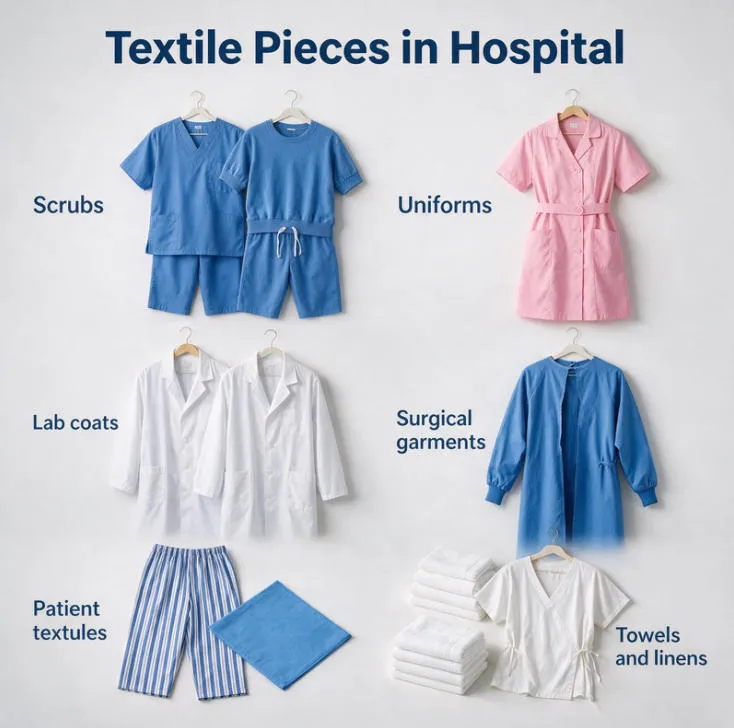
Each piece has a lifecycle: it is issued to a staff member, worn during a shift, returned for decontamination, washed at high temperature, sorted, inspected, and placed back into service. The challenge is that, for most hospitals, no one can reliably say where any given piece is at any given moment.
Six Questions Hospital Administrators Cannot Answer
In a traditional textile operation, the gap between soiled return and clean reissue is a black hole. Ask a laundry manager or a hospital logistics director these questions, and you will often get a shrug, a spreadsheet guess, or a paper log that is three days out of date:
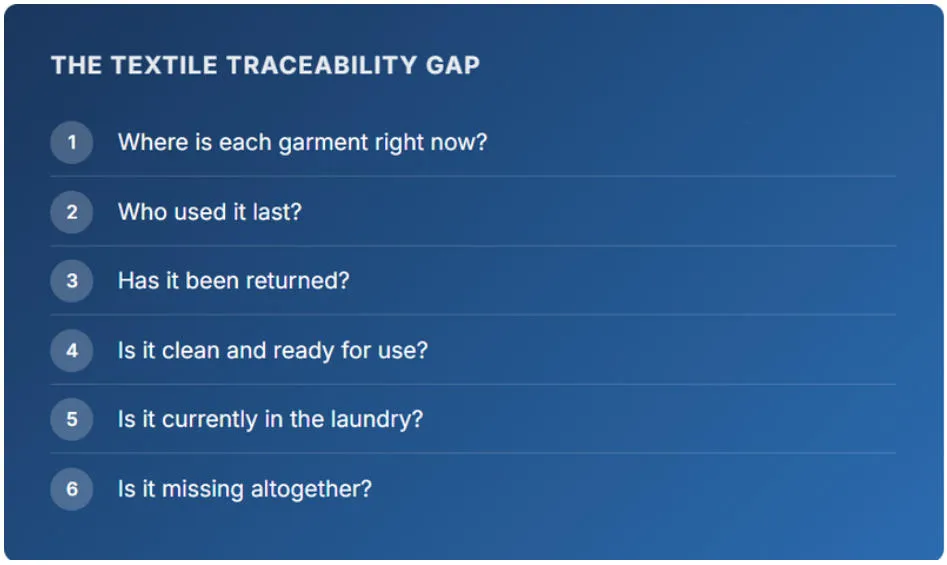
These are not trivial questions. They sit at the intersection of infection control, operational cost, regulatory compliance, and staff satisfaction. When a nurse cannot find a clean scrub at 7 a.m., when a surgical team discovers a gown shortage mid-procedure, or when the finance department cannot reconcile laundry invoices against actual usage, the consequences are immediate — and expensive.
The True Cost of Textile Blindness
Without traceability, hospitals bleed money and efficiency in ways that are difficult even to measure. Manual counting requires teams of staff to hand-sort and tally piles of fabric, a process that is slow, error-prone, and physically demanding. Garments disappear into lockers, go home with staff, or are simply discarded rather than laundered. Replacement rates climb. Infection control teams cannot verify that a soiled surgical garment followed the proper decontamination chain.
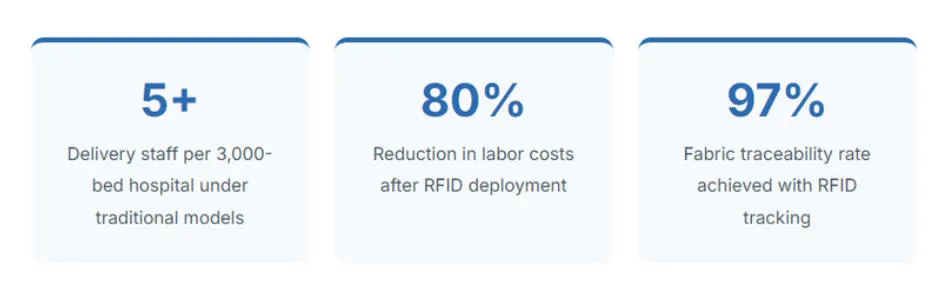
Data source: Based on Zhilai Med deployment data.
Meanwhile, billing remains a source of friction. Hospitals and laundry contractors often settle charges based on estimated weight or flat departmental allocations rather than verified per-piece usage. Departments are overcharged, cross-subsidies go unnoticed, and disputes consume administrative time. The root cause is simple: there is no item-level record of what was washed, for whom, and when.
Why Manual Systems and Barcodes Fall Short
Paper logs and spreadsheets cannot keep pace with a 24/7 hospital environment. They are retrospective, not real-time, and they depend on human diligence that inevitably breaks down during busy shifts. Barcode scanning is an improvement, but it requires line-of-sight reading, one item at a time — impractical when you need to count 500 garments in a single cart.
What hospitals and laundry operators need is a way to identify, count, and track garments in bulk, automatically, at every handoff point in the cycle. That technology exists. It is called RFID.
How RFID Makes Every Garment Traceable
Radio-frequency identification (RFID) embeds a tiny, washable chip into each textile. Unlike a barcode, an RFID tag does not need to be visible. It can be read through fabric, plastic, and even metal carts, dozens or hundreds at a time. A single RFID scan can inventory an entire hamper of soiled scrubs in seconds — no unfolding, no line-of-sight, no manual tally.
When every garment carries a unique RFID identity, the six questions above get answered automatically:
Where is it? The last reader that detected the tag reveals its current zone.
Who used it? The garment dispenser links the garment to the staff member who collected it.
Returned? The return unit records the drop-off and sends a confirmation.
Clean or soiled? The system tracks whether the item has passed through the wash cycle.
In the laundry? RFID tunnel readers at the laundry plant log every inbound and outbound batch.
Missing? The platform flags any item with no status update for seven days as suspected lost.
Zhilai Med Smart Textile Management Solution
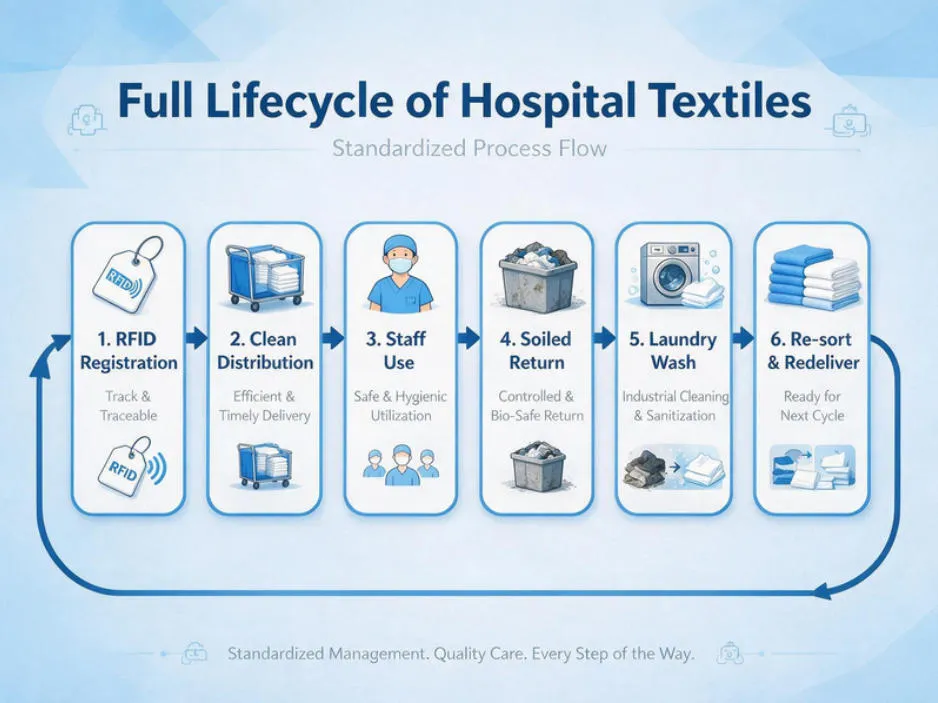
Zhilai Med has built an end-to-end intelligent textile management platform that connects the hospital ward and the laundry plant into a single, data-driven loop. Zhilai Med combines RFID, IoT, cloud computing, and purpose-built intelligent hardware to manage the full lifecycle of various hospital textiles — from registration and sorting to distribution, use, return, washing, and reissue.
Intelligent Hardware at Every Touchpoint
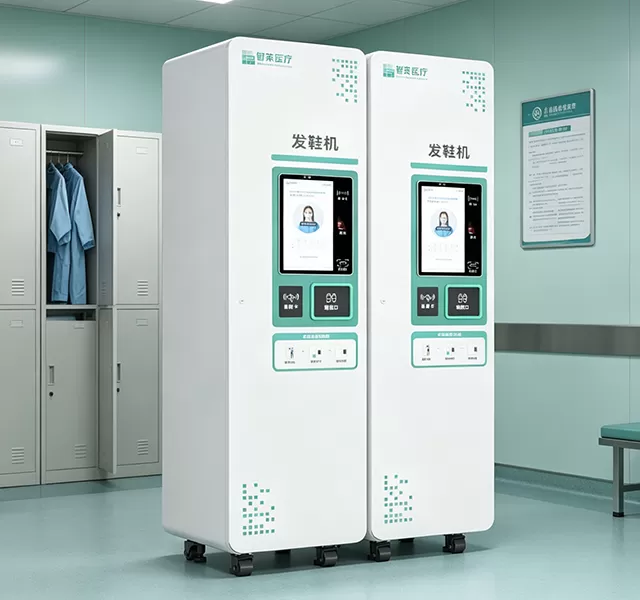
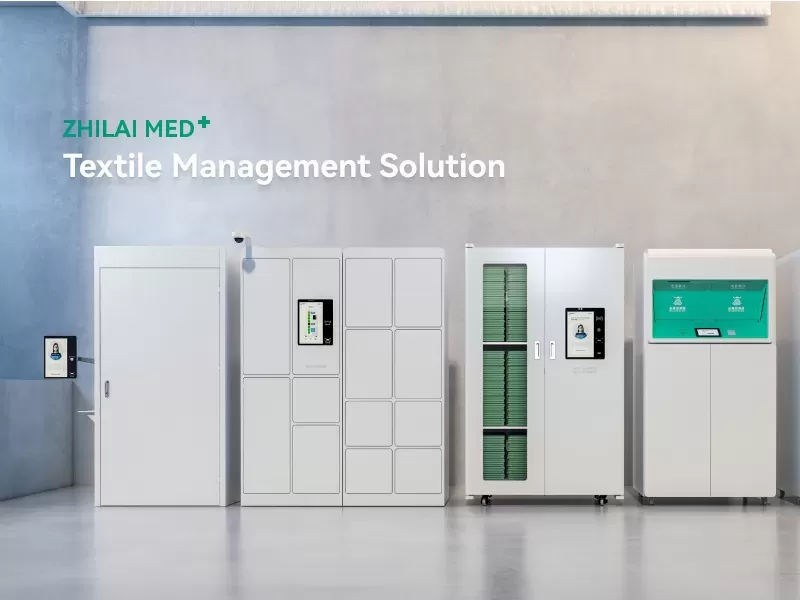
The solution deploys a family of ruggedized, hospital-grade devices designed for the demanding conditions of clinical and laundry environments:
RFID Registration Workstation
Three-sided metal shielding prevents cross-reading. Registers individual or batch tags in under 3 seconds, capturing type, size, color, and owner.
RFID Inventory Machine
Counts 500+ fabrics in a single scan, giving laundry operators an instant, accurate picture of inbound and outbound stock.
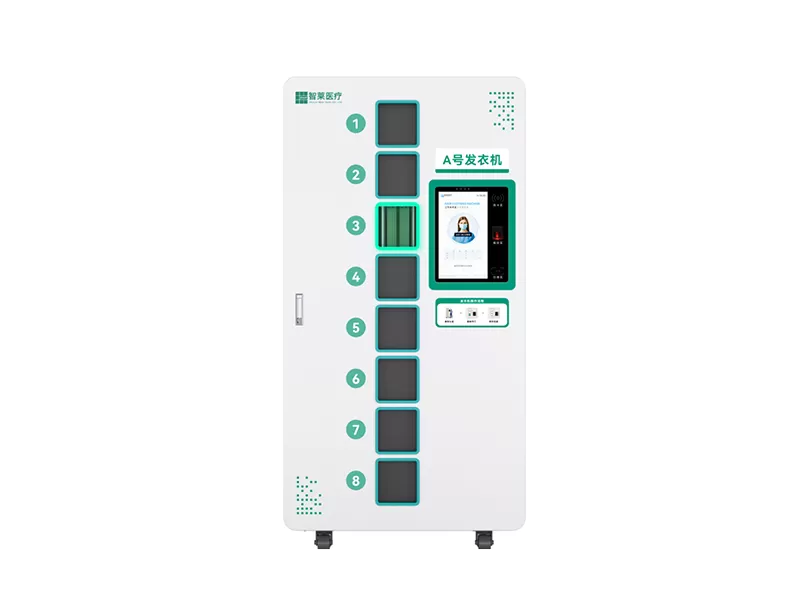
A robotic arm issues clean scrubs on demand via contactless retrieval. Holds up to 500 uniforms and sends email alerts when stock runs low.
Workwear Distribution Cabinet
Supports facial recognition, staff cards, QR codes, and passwords. Dual modes for assigned or shared uniforms, with remote monitoring and alerts.
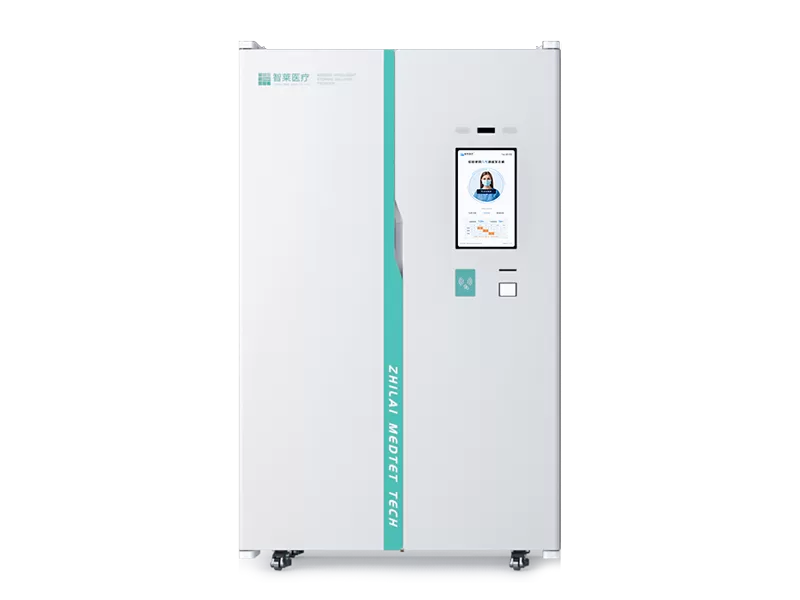
Manages patient textiles and bed linens with automatic RFID inventory upon every door close, recording who took what and when.
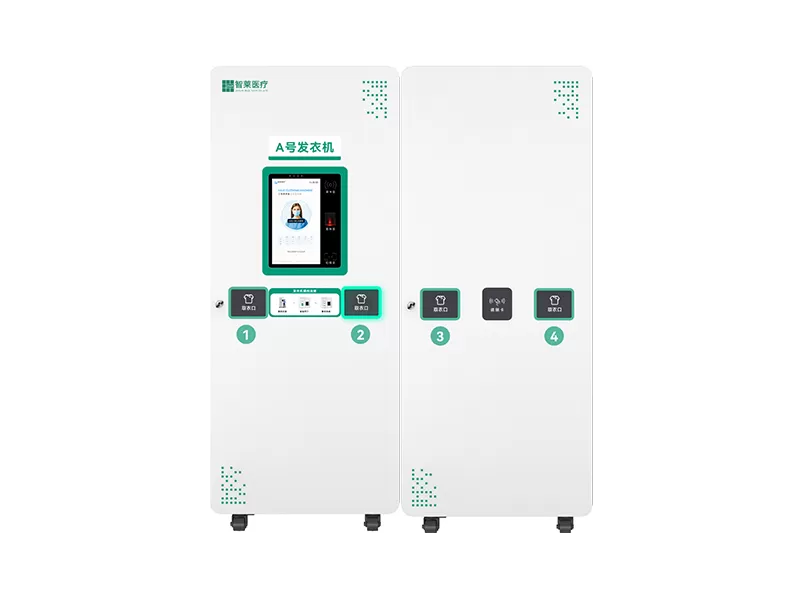
Clothes Return Unit
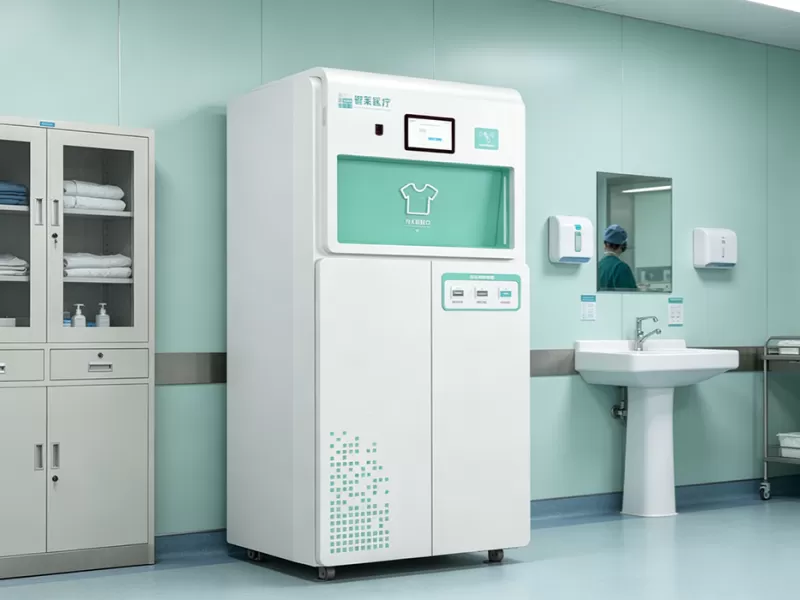
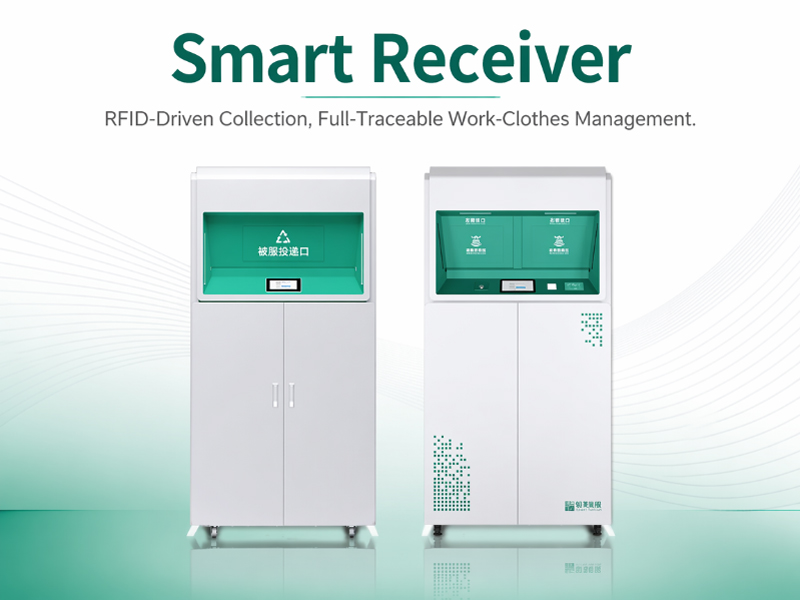
Compact 0.6 m² footprint with a 28-inch opening. Infrared plus RFID dual detection recovers soiled garments in under 3 seconds, with offline emergency mode.
Software That Turns Data Into Decisions
Behind the hardware is a cloud-based software platform with three layers:
1. Real-time data dashboard: A wall-mounted or desktop view of inventory levels, circulation status, and alerts across the entire hospital or laundry facility.
2. Backend management system: Integrates with the hospital's existing staff card or HR system. It tracks every garment's current status and full history, exports department-level wash-cost reports, and automatically flags items suspected lost (no update in 7 days) or hoarded (unused for 30 days).
3. WeChat mini-program / mobile app: Staff can view their pickup and return records, check real-time cabinet inventory, review personal laundry cost settlements, and access smart-cabinet usage guides from their phones.
Billing Based on Reality, Not Estimates
Because every wash cycle is recorded at the item level, the system automatically generates hospital-wide washing ledgers, department-level wash sheets, and expense settlement reports. Hospitals and laundry contractors can settle bills based on verified per-piece usage — eliminating disputes and cross-subsidies between departments.
Customer Value: What Changes on Day One
The Zhilai solution is designed around six measurable outcomes that matter to hospital CFOs, infection control teams, nursing managers, and laundry operators alike:
Goal | How RFID Delivers |
Digital management | Every garment has a digital identity and a complete, searchable lifecycle record. |
Reduced infection risk | Contactless dispensing and return, plus verified wash-cycle tracking, support hygienic textile handling. |
Reduced asset loss | 97% traceability rate and automatic lost-item alerts dramatically shrink replacement budgets.(Data source: Based on Zhilai Med deployment data.) |
Accurate expense settlement | Per-piece wash data replaces estimated weight billing, ensuring fair, auditable chargebacks. |
Higher operating efficiency | One delivery staff member can restock in the morning and collect in the afternoon — enough for a 3,000-staff hospital — cutting headcount by 80%..(Data source: Based on Zhilai Med deployment data.)
|
Improved staff satisfaction | Clean scrubs are available on demand, return takes seconds, and WeChat confirmations eliminate disputes. |
Deployed Across Major Healthcare Networks
The Zhilai Med smart textile management solution is already in production at hospitals including Queen Mary Hospital in Hong Kong, Pamela Youde Nethersole Eastern Hospital and Kowloon Hospital. In mainland China, the system serves institutions such as Wuhan Tongji Hospital, Shanghai First People's Hospital, the First Affiliated Hospital of Sun Yat-sen University, and Shandong Provincial Hospital, among many others.
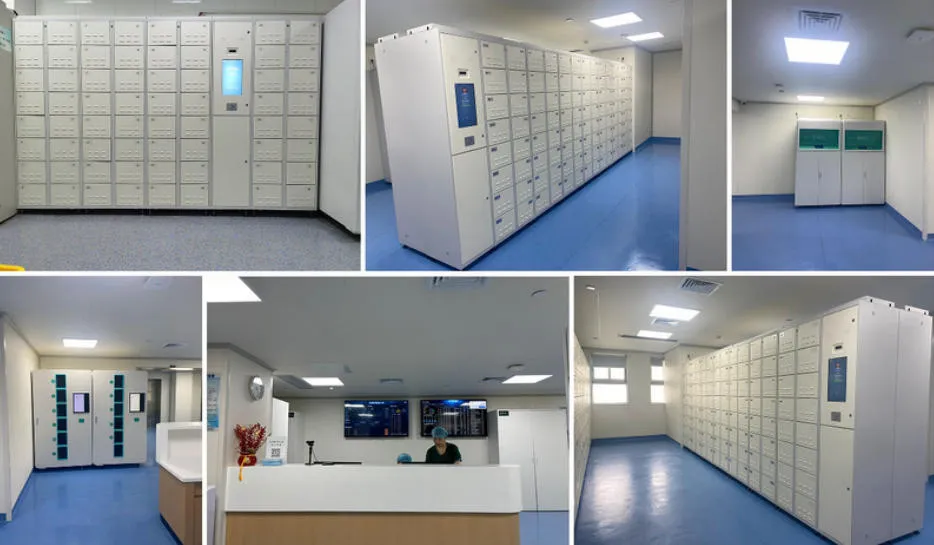
Across these deployments, the results are consistent: labor costs drop sharply because fewer staff can cover more circulation points; textile loss falls because every item is accounted for; billing disputes disappear because the data is unambiguous; and clinical staff spend less time hunting for garments and more time on patient care.
From Black Hole to Closed Loop
The hospital laundry does not have to be a black hole. With RFID-tagged textiles, intelligent dispensing and collection hardware, and a cloud platform that connects every handoff, the entire hospital-to-laundry cycle becomes a closed, traceable loop. Every garment has a story — who wore it, when it was washed, where it is now — and that story is available in real time.
For hospitals, that means lower costs, stronger infection control, cleaner billing, and happier staff. For laundry operators, it means accurate counts, efficient routing, and transparent settlements. And for the patients who depend on clean, safe textiles every day, it means one less thing to worry about.
Ready to Close the Traceability Gap?
Discover how Zhilai's RFID-powered textile management platform can transform your hospital laundry operation. With 596 patents, 206 software copyrights(Data includes parent company; as of June 2026.), and deployments across leading hospitals in Hong Kong and mainland China, we bring proven expertise to every deployment.