Introduction
Taking a leading tertiary hospital in China as an example, the facility handles approximately 1,500 pieces of medical textiles every day, including hospital gowns, patient clothing, bed linens, and surgical textiles.
Under the traditional management model, laundry staff manually visit different departments to collect used medical textiles, sort and count contaminated items, and transport them to external or internal laundry facilities for cleaning. After the washing process is completed, clean textiles are manually counted again and distributed back to each department based on the recorded consumption data.
Without complete traceability, hospitals face linen loss, infection risks, inventory shortages, and rising operational costs.Traceability is no longer optional.
Why Linen Traceability Matters
Hospital textiles, including bed linens, patient gowns, surgical garments, and staff uniforms, are essential resources in healthcare facilities. However, managing thousands of textile items across multiple departments, laundry facilities, and storage areas every day presents significant operational challenges. Without effective traceability, hospitals may face risks that impact efficiency, cost control, and patient safety.
High Risk of Healthcare-Associated Infections (HAIs)
Medical textiles are closely related to infection prevention and control. During collection, transportation, washing, and distribution, improper handling or insufficient process visibility may increase the risk of cross-contamination. A traceable linen management system helps ensure that every textile follows a controlled process from collection to cleaning, disinfection, and reuse.
Low Efficiency and High Management Costs
Traditional linen management often relies on manual collection, counting, and recording. Staff spend considerable time performing repetitive tasks, while inaccurate records can lead to unnecessary labor costs, inefficient workflows, and difficulties in optimizing resources.
Lack of Full Lifecycle Traceability
Without digital tracking, hospitals cannot easily identify where a textile is located, when it was cleaned, how many times it has been used, or when it should be replaced. This lack of lifecycle visibility makes it difficult to improve textile utilization and quality management.
Increasing Regulatory and Industry Requirements
With growing attention to healthcare quality and infection control, international and national standards are placing higher requirements on textile hygiene management and process control. For example, EN 14065:2016 – Textiles – Laundry processed textiles – Biocontamination control system provides a framework for controlling biocontamination risks in professionally processed textiles. In China, WS/T 508—2025 Standard for Washing and Disinfection Technique of Medical Textiles in Healthcare Facilities also emphasizes standardized washing, disinfection, and quality control procedures for medical textiles.
These evolving standards highlight the importance of transparency, documentation, and traceability throughout the entire textile management lifecycle.
The Complete Linen Journey
Linen management is not a single process but a complete lifecycle involving multiple departments, locations, and operational steps. From the moment used textiles leave a ward to the moment clean textiles return for reuse, every stage requires accurate handling, monitoring, and documentation.
A complete linen traceability system provides visibility throughout this journey, ensuring that every textile can be identified, tracked, and managed efficiently.
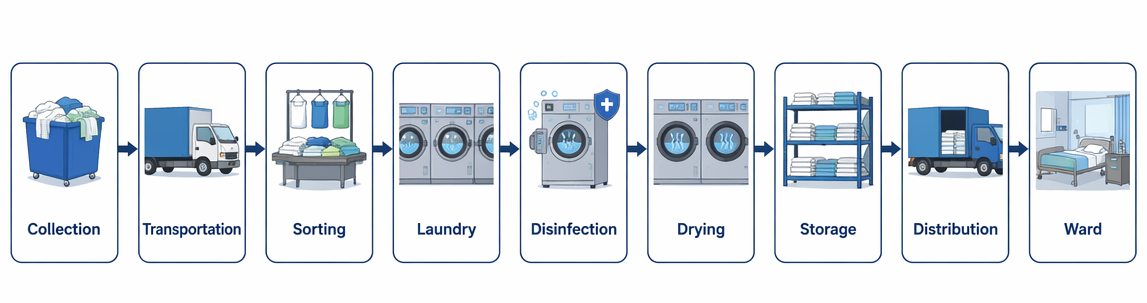
1. Collection: Capturing the First Record of Every Textile
What happens
Used medical textiles are collected from different hospital departments.Staff separate contaminated textiles and prepare them for transportation to the laundry facility.
Potential risks:
Incorrect sorting of contaminated textiles
Missing or misplaced linen items
Mixed textiles from different departments
Lack of collection records
Key data collected:
Department name
Collection time
Staff information
Textile type
Quantity collected
2. Transportation: Moving Textiles Safely Between Locations
What happens
Collected textiles are transported from hospital departments to the laundry area through dedicated transportation routes.
Potential risks
Loss during transportation
Improper handling of contaminated textiles
Delayed delivery to laundry facilities
Key data collected
Transportation time
Collection location
Destination
Responsible personnel
Number of textile items transferred
3. Sorting: Preparing Textiles for the Correct Laundry Process
What happens
Laundry staff classify textiles according to type, contamination level, material, and washing requirements before entering the cleaning process.
Potential risks
Incorrect classification
Human counting errors
Delayed processing
Key data collected
Textile category
Contamination level
Sorting time
Processing batch
4. Laundry & Disinfection: Ensuring Hygiene and Safety
What happens
Textiles undergo professional washing, disinfection, and quality control procedures to remove contaminants and prepare them for reuse.
Potential risks
Incomplete cleaning records
Difficulty verifying washing history
Failure to meet hygiene requirements
Key data collected
Washing cycle
Disinfection record
Processing time
Laundry equipment information
5. Drying & Quality Inspection
What happens
After washing and disinfection, textiles are dried, inspected, folded, and prepared for storage.
Potential risks
Damaged textiles entering circulation
Lack of lifecycle information
Difficulties tracking replacement needs
Key data collected
Inspection results
Textile condition
Usage frequency
Maintenance history
6. Storage: Managing Clean Linen Inventory
What happens
Clean textiles are stored in warehouses or smart storage areas before being distributed back to hospital departments.
Potential risks
Overstock or shortage
Incorrect inventory records
Limited visibility of available stock
Key data collected
Inventory quantity
Storage location
Available textile types
7. Distribution: Returning Textiles to Departments
What happens
Clean textiles are delivered to different departments.
Potential risks
Incorrect allocation
Manual distribution errors
Delayed supply replenishment
Key data collected
Receiving department
Distribution time
Quantity delivered
Recipient information
8. Ward Usage: Completing the Textile Lifecycle
What happens
Clean textiles return to patient wards and clinical areas, where they are used until the next collection cycle begins.
Potential risks
Unknown usage history
Excessive textile consumption
Difficulty determining replacement timing
Key data collected
Usage frequency
Department consumption
Textile lifecycle status
Across the entire linen journey, every movement creates valuable operational data. However, traditional manual management methods make it difficult to capture, connect, and analyze this information in real time. This creates a need for digital traceability technologies that can provide complete visibility from collection to reuse.
Common Challenges Without Traceability
Without a digital traceability system, many hospitals still rely on manual counting, paper-based records, and fragmented communication between departments and laundry providers. While these methods may work for small-scale operations, they become increasingly inefficient as the volume and complexity of healthcare textiles continue to grow.
1. Manual Counting Creates Inefficient Workflows
Traditional linen management consumes significant labor resources and increases the possibility of human errors.
2. Inventory Errors Affect Daily Operations
Without real-time inventory visibility, it can result in inaccurate stock levels and difficulty planning daily linen requirements.
3. Linen Loss Increases Operational Costs
When textiles cannot be tracked throughout their lifecycle, it can create unnecessary operating expenses for hospitals and laundry providers.
4. Delayed Laundry Impacts Textile Availability
A lack of process visibility makes it difficult to monitor where textiles are within the laundry cycle.
5. Overstock Leads to Higher Storage Costs
To avoid shortages, many hospitals maintain additional textile inventory as a safety buffer.
6. Understock Creates Supply Risks
On the other hand, insufficient inventory can lead to shortages in critical departments.
7. Cross-contamination Risks Increase
When textile movement and handling processes are not properly documented, it becomes more difficult to ensure strict separation between contaminated and clean textiles, increasing potential infection control risks.
8. Lack of Visibility Limits Decision-Making
Without accurate data on textile usage, washing frequency, circulation history, and inventory status, hospitals cannot effectively optimize resource allocation or improve operational efficiency.
These challenges highlight a fundamental problem in traditional linen management: hospitals do not simply need more textiles—they need better visibility and control over every textile throughout its lifecycle. This is where digital traceability technologies, such as RFID-based linen management systems, create significant value.
How RFID Enables End-to-End Linen Traceability
RFID creates a digital identity for every textile and connects every step of the linen lifecycle.RFID technology transforms traditional linen management from a manual, fragmented process into a connected and data-driven system. By assigning each textile a unique digital identity, hospitals and laundry providers can track the location, movement, usage history, and lifecycle status of every item throughout the entire process.
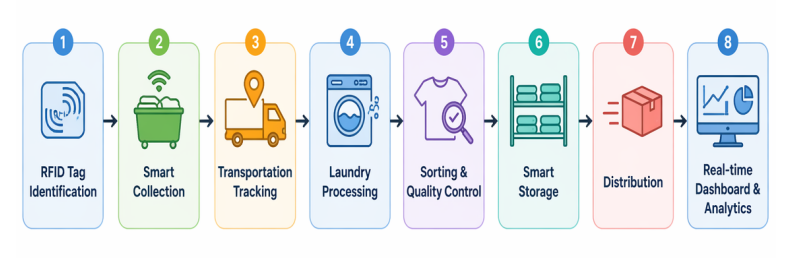
1. Every Linen Receives a Unique RFID Identity
Each textile item is equipped with an RFID tag containing a unique identification number. Unlike traditional labels or manual records, RFID enables automatic identification and data capture without requiring direct scanning.
2. Smart Collection: Capturing the First Data Point
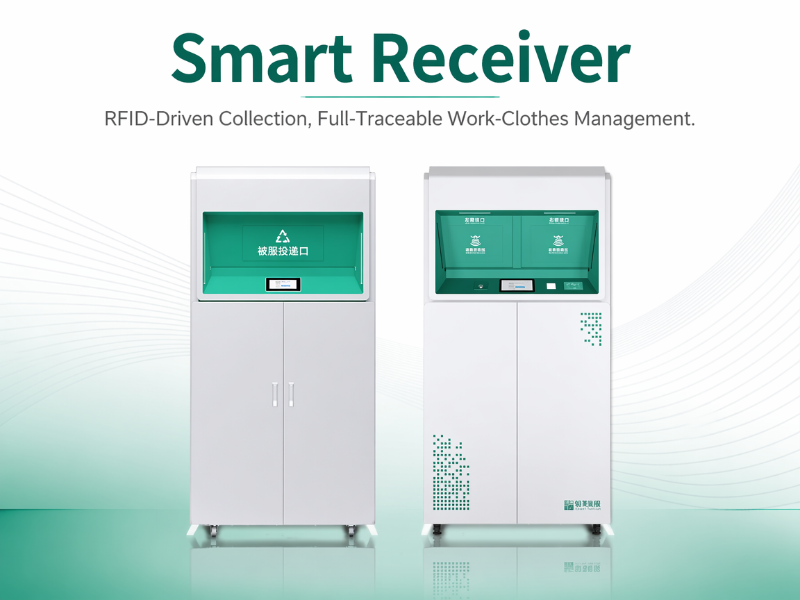
During the collection process, RFID-enabled collection systems automatically identify returned textiles and record key information, including department, collection time, textile category, and quantity.
3. Laundry Tracking: Connecting Washing and Disinfection Processes
As textiles enter the laundry facility, RFID readers capture each item's movement and connect it with washing, disinfection, and processing records. This allows operators to understand where each textile is within the cleaning cycle.
4. Intelligent Sorting and Quality Management
RFID data helps laundry teams improve sorting accuracy by automatically identifying textile categories, usage conditions, and processing requirements.
5. Smart Storage and Automated Distribution
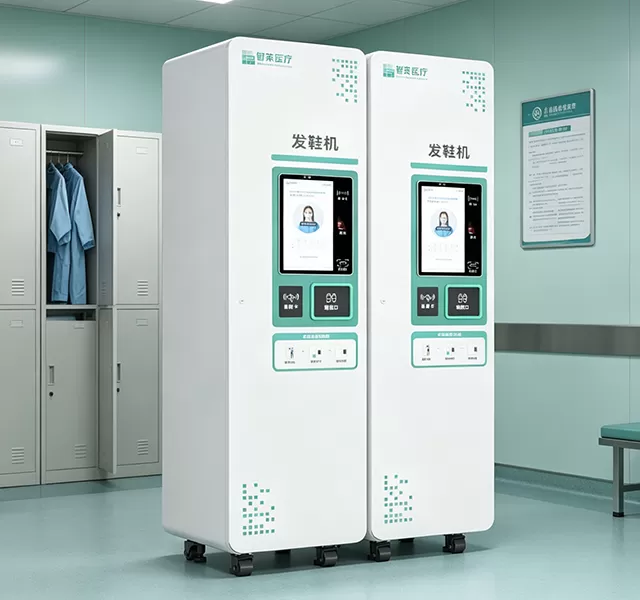
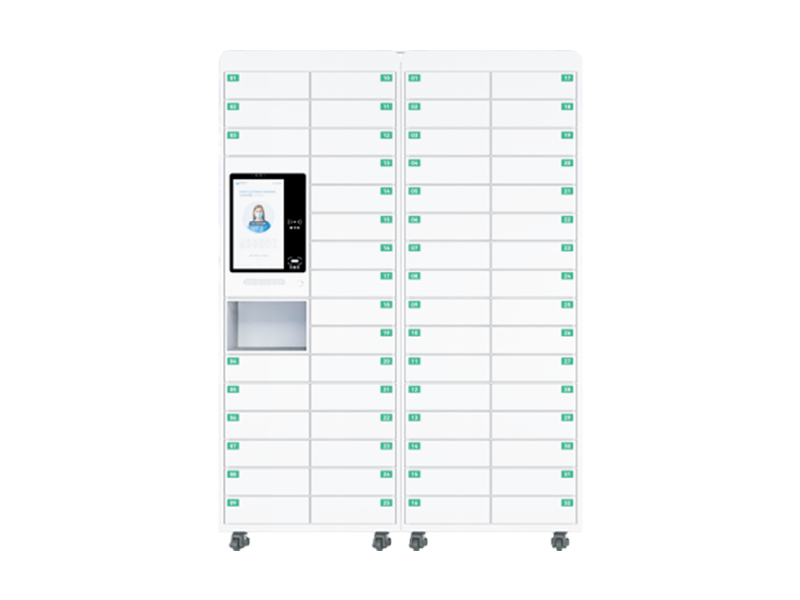
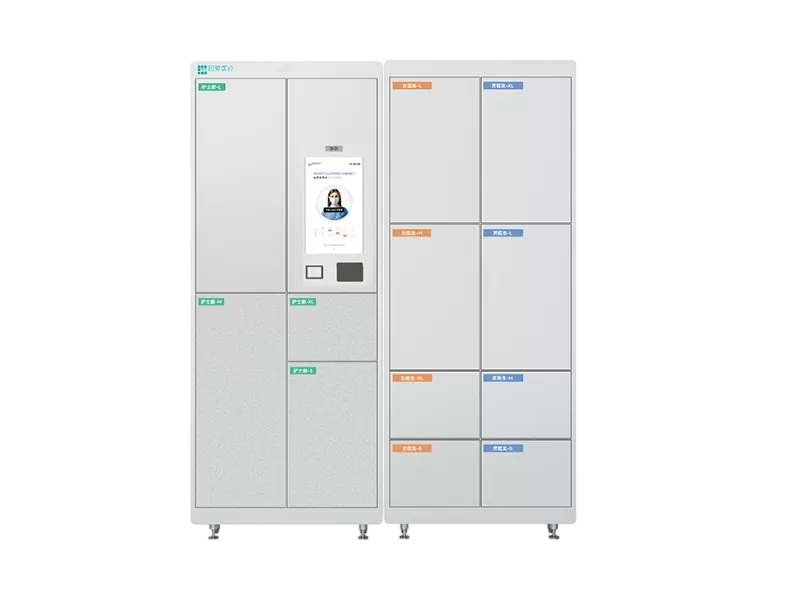
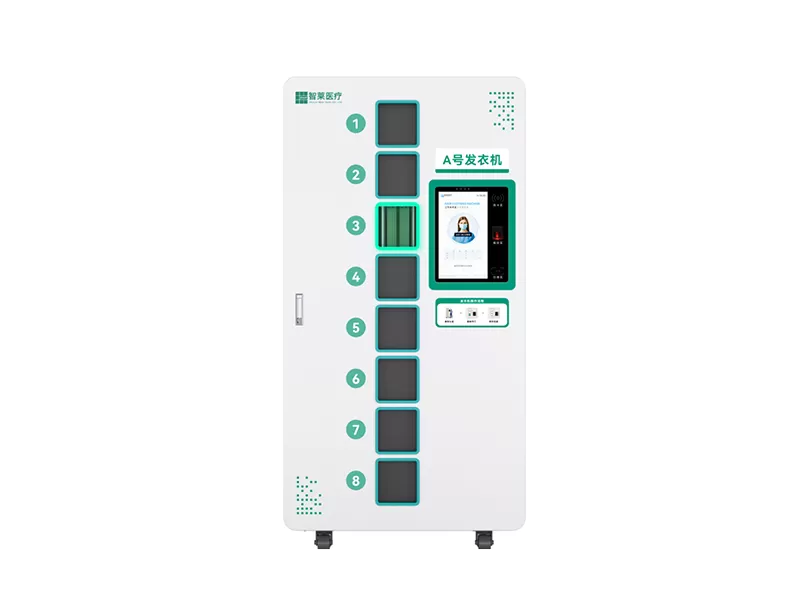
After cleaning, RFID-enabled smart cabinets provide controlled storage and automated distribution. Healthcare workers can access required textiles based on authorization, while the system automatically records usage and inventory changes.
6. Real-time Inventory Dashboard and Analytics
All collected data is integrated into a centralized management platform, providing real-time visibility into inventory levels, textile circulation, usage frequency, and operational performance.
By connecting collection, laundry, storage, and distribution through RFID technology, hospitals and laundry providers can achieve complete end-to-end linen traceability. RFID does not simply track where a textile is located—it creates a digital record of its entire lifecycle, enabling safer, more efficient, and smarter textile management.
Complete linen traceability is no longer just about knowing where a textile is — it is about gaining complete visibility throughout its lifecycle, improving patient safety, enhancing operational efficiency, and enabling data-driven healthcare management.