Hospital hygiene is no longer limited to sterilization, disinfection, and environmental cleaning. Modern healthcare facilities increasingly need to manage hygiene as a connected system, covering medical instruments, clinical environments, staff workflows, and reusable textiles. Among these areas, hospital workwear management is often overlooked.
Scrubs, uniforms, lab coats, surgical garments, and other reusable textiles move through hospitals every day. They are collected, washed, transported, stored, distributed, used, and returned. Without effective management, this circulation can create unnecessary labor, inventory uncertainty, garment loss, and limited traceability. This is where smart workwear management can complement existing hospital hygiene solutions.
The cost of workwear is not limited to the garments themselves. Every request, size enquiry, issue, return and replacement also requires staff time. When these administrative tasks are multiplied across hundreds or thousands of employees, the hidden management cost can become significant.
For example, if 500 employees each require just one hour of administrative support per year, that represents 500 hours of management time. At an estimated fully loaded labour cost of £20 per hour, this would equal approximately £10,000 per year.
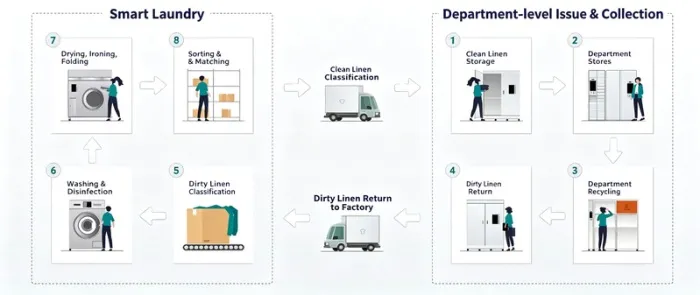
By combining RFID technology, automated workwear dispensing, smart garment collection, and digital tracking, hospitals can create a more controlled and traceable workflow from laundry to staff and back again.
What Does a Complete Hospital Hygiene Solution Include?
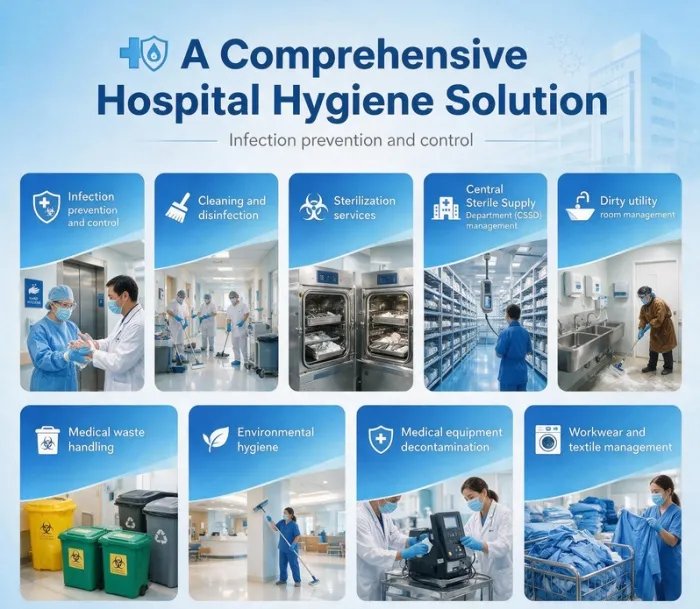
Hospital hygiene involves multiple processes working together to reduce contamination risks and support safe clinical operations. Depending on the facility, a comprehensive hospital hygiene solution may include:
Infection prevention and control
Cleaning and disinfection
Sterilization
Central Sterile Supply Department (CSSD) management
Dirty utility room management
Medical waste handling
Environmental hygiene
Medical equipment decontamination
Workwear and textile management
Traditionally, the focus has been placed heavily on medical instruments, operating rooms, sterilization, and environmental surfaces. However, reusable workwear and textiles also move continuously through the healthcare environment.
This creates an important question: How can hospitals ensure that workwear is properly distributed, collected, tracked, and returned to the laundry process? A complete hygiene strategy should consider this workflow as well.
Why Hospital Workwear Management Matters
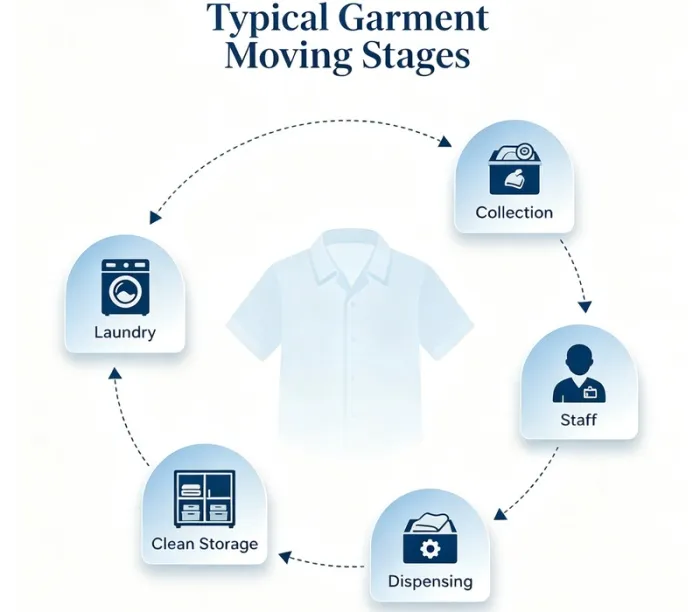
Hospital workwear is more than a uniform. It is part of a controlled textile cycle. A typical garment may move through several stages:
When these processes are managed manually, hospitals may have limited visibility into what happens at each stage. For example, hospital managers may not always know:
How many garments are currently available?
Which garments have been dispensed?
Which employees have received specific workwear?
Which garments have been returned?
How many items are currently at the laundry?
Which garments are missing?
When additional garments need to be replenished?
Manual records and physical counting can also increase the workload for hospital staff. As hospital operations become increasingly digital, healthcare textile management needs to evolve as well.
From Manual Distribution to Smart Workwear Management
Traditional workwear distribution often relies on storage rooms, shelves, manual issuing, and spreadsheets or paper records. A smart workwear management system introduces digital identification and automation into this process. Each garment can be assigned a unique RFID identity. When the garment is processed by an RFID-enabled system, its movement can be associated with relevant information such as garment identity, user, time, and status.
This approach provides hospitals with greater visibility into the workwear lifecycle. Instead of simply knowing how many garments are physically stored, managers can gain a clearer understanding of where garments are within the overall workflow.
How RFID and Automation Create a Closed-Loop Workwear Workflow
The combination of RFID and automation is particularly valuable because workwear management does not end when a garment is dispensed.
1. RFID Identification
Each garment can be equipped with an RFID tag containing a unique digital identity. This allows individual garments to be identified throughout their lifecycle.
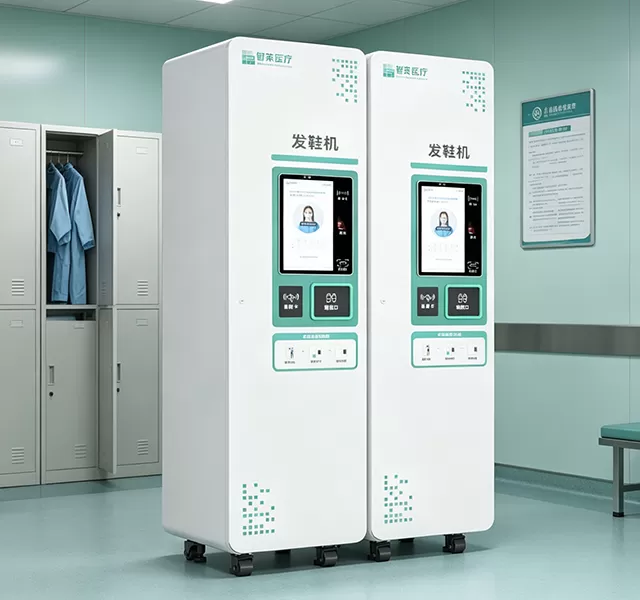
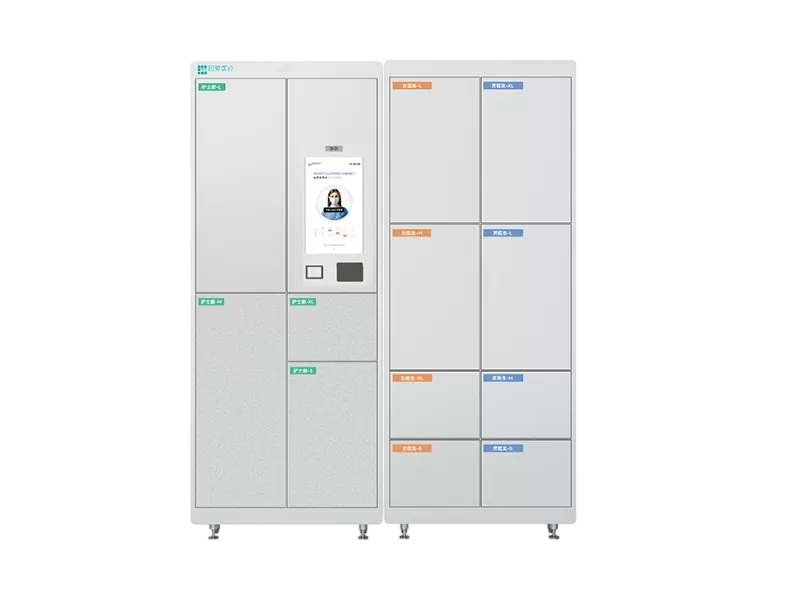
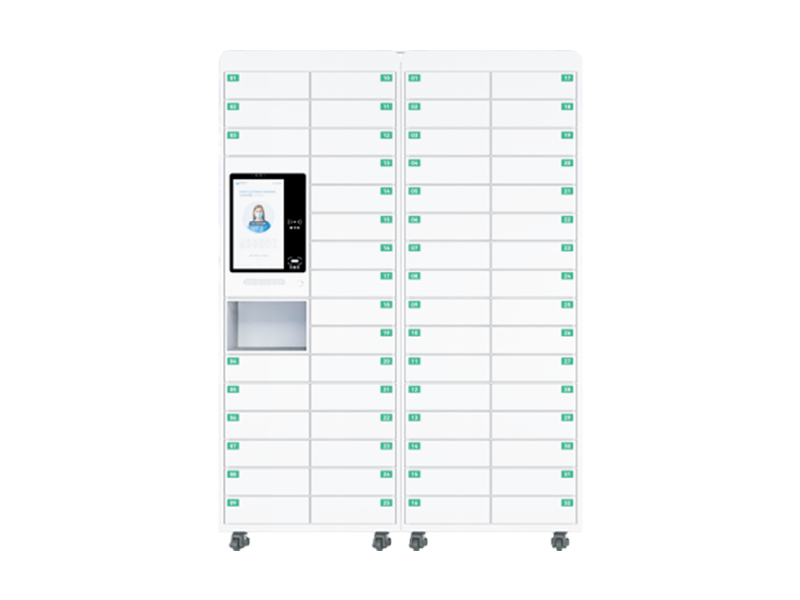
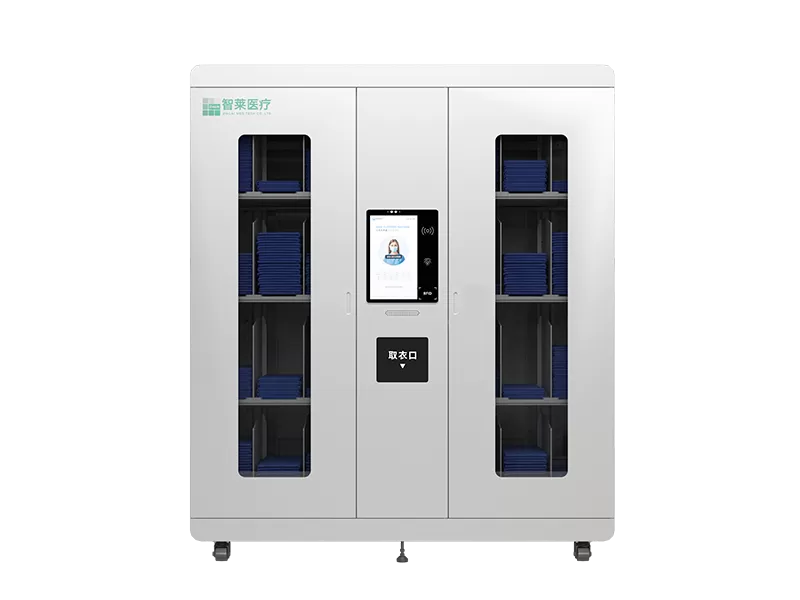
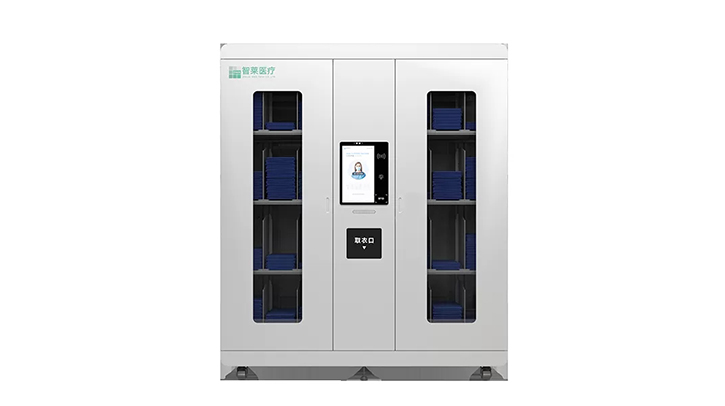
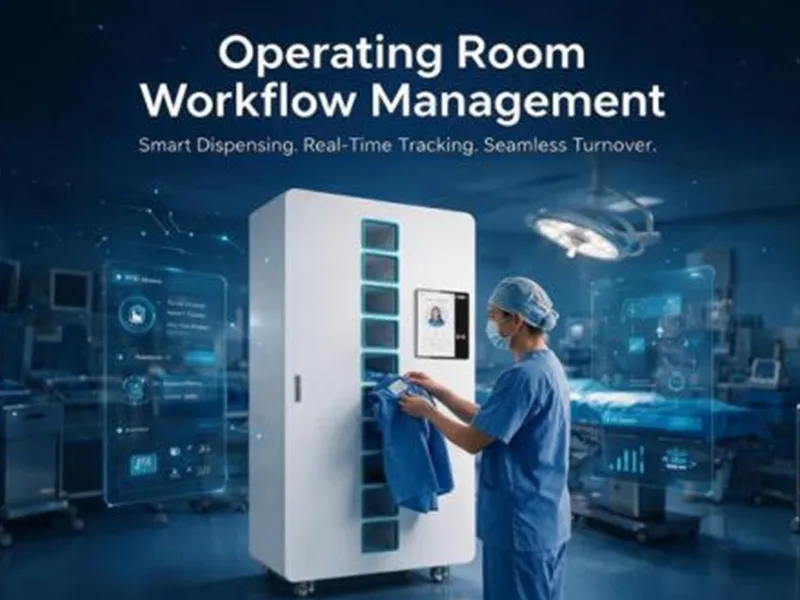
An automated workwear dispenser provides secure, controlled, and efficient access to garments for authorized employees. Multiple identification methods—including work cards, QR codes, facial recognition, and account passwords—allow hospitals to choose the access method that best fits their workflow.
With real-time remote management, managers can monitor inventory levels and equipment status remotely, while automatic alerts can notify staff when inventory is low or cabinet doors are left open. Every dispensing event can also be recorded automatically, creating a more transparent and traceable workwear distribution process.
3. Digital Usage Records
Instead of relying on manual registration, the system can associate workwear transactions with users and timestamps. This improves operational visibility and helps organizations understand workwear consumption patterns.
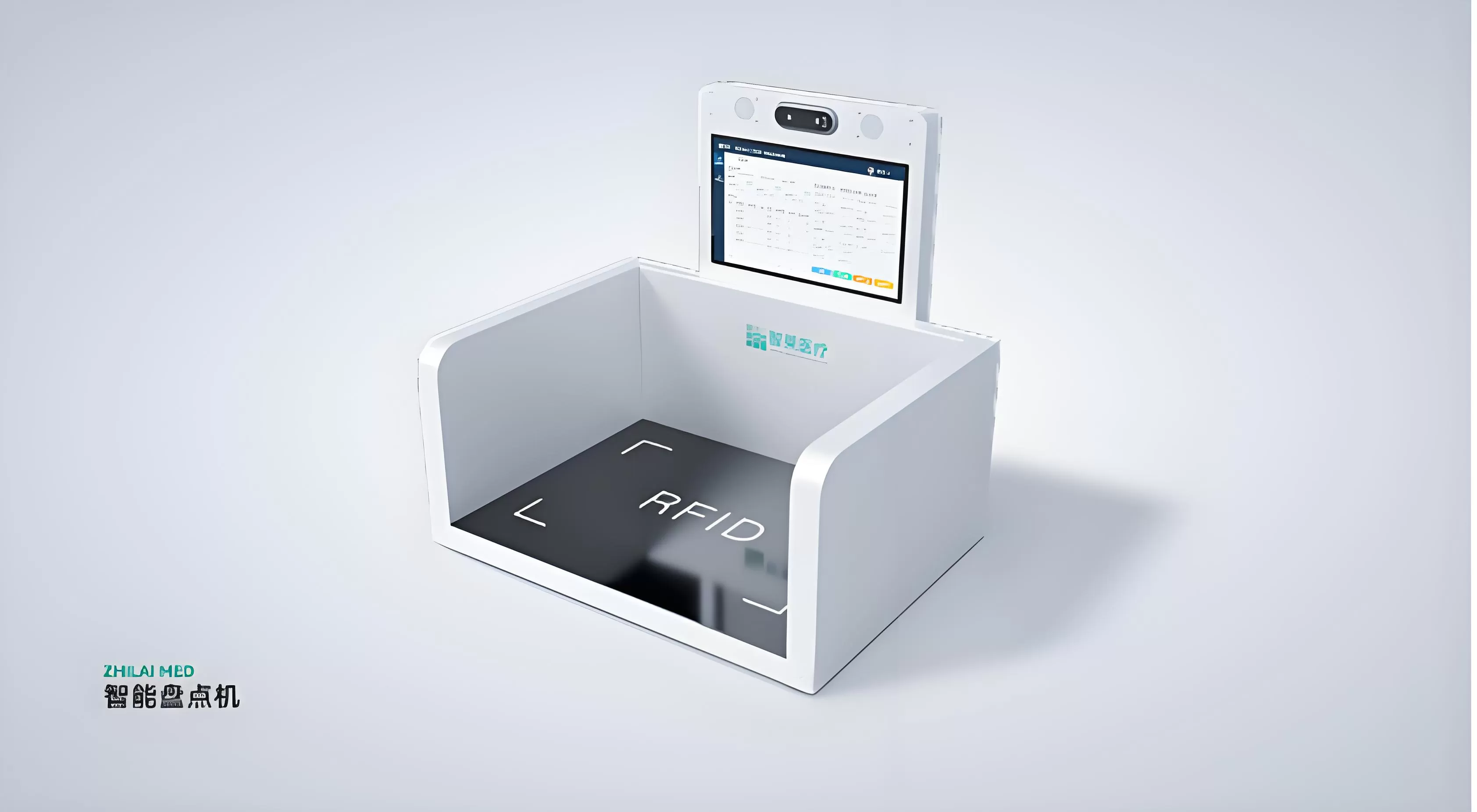
Workwear returns become a fast, automated, and traceable process with smart garment collection. RFID and infrared dual detection automatically identifies returned garments, reducing missed detections and giving managers clearer visibility into garment circulation.
With a 28-inch extra-large recycling opening, capacity for 50+ garments, and a recovery time of less than 3 seconds, Smart Garment Return Unite is designed for high-volume daily use. Smart voice reminders and automatic alerts help prevent overfilling and identify abnormal returns, while offline recycling keeps the process running during power interruptions.
5. Laundry Tracking
Once collected, garments can enter the laundry process while maintaining their RFID identity. This creates the potential for greater RFID linen and textile traceability, connecting hospital operations with laundry management.
6. Inventory Visibility
With data collected across the workflow, managers can gain a clearer view of workwear availability, circulation, and replenishment requirements. The result is a closed-loop system rather than a series of disconnected manual processes.
How Smart Workwear Management Complements Existing Hospital Solutions
Smart workwear management should not be viewed as a replacement for existing infection control or hospital hygiene infrastructure. Instead, it can become an additional layer within a broader healthcare solution.
Together, these components contribute to a more comprehensive hospital hygiene ecosystem. For healthcare solution providers, this is particularly relevant. Companies already supplying hospitals with infection control equipment, CSSD solutions, medical equipment, or hospital hygiene systems can potentially integrate RFID workwear management into their existing portfolio. Rather than offering hospitals an isolated piece of equipment, they can provide a broader workflow solution covering additional aspects of hospital operations.
A New Opportunity for Healthcare Solution Providers
The benefits of smart workwear management are not limited to hospitals. For medical equipment distributors, healthcare solution providers, and hospital system integrators, workwear management can represent a complementary solution category. Adding smart workwear management can help extend these capabilities into another important hospital workflow. A healthcare solution provider can potentially offer:
Existing Hospital Hygiene Solutions
↓
RFID Workwear Management
↓
Automated Dispensing
↓
Smart Collection
↓
Textile Traceability
This creates an opportunity to provide hospitals with a more complete solution while expanding the provider's product portfolio. For hospitals, working with a solution provider that can address multiple related workflows can also simplify project coordination and implementation.
Building a Smarter Hospital Hygiene Ecosystem
The development of smart hospitals is not only about electronic medical records, connected medical devices, or digital patient management. Everyday physical assets can also become part of the digital healthcare environment. Workwear and reusable textiles are a good example.
With RFID identification, automated dispensing, smart collection, and digital management, a traditional garment can become a traceable healthcare asset.Instead of simply asking:
How many uniforms do we have?
Hospital managers can work toward answering broader questions:
Where are the garments?
Who has received them?
Which garments have been returned?
How many are currently in the laundry cycle?
When should additional garments be replenished?
This shift from manual counting to data-driven management can support more efficient and standardized hospital operations.
Making Workwear Part of the Complete Hospital Hygiene Strategy
Hospital hygiene is an interconnected system. Sterilization, infection prevention, CSSD operations, environmental hygiene, and textile management all contribute to a safe and efficient healthcare environment. Smart workwear management adds an important digital layer to this ecosystem. By combining RFID workwear tracking, automated workwear dispensing, smart garment collection, and laundry traceability, hospitals can improve visibility and control across the workwear lifecycle.
For hospitals, this means a more standardized and data-driven approach to textile management. For healthcare solution providers and medical equipment distributors, it creates an opportunity to complement existing hospital hygiene solutions with a new category of automation and RFID technology.
Ultimately, the future of hospital hygiene is not about managing individual processes in isolation. It is about connecting them into a smarter, more traceable, and more efficient healthcare ecosystem.
We use cookies to offer you a better browsing experience, analyze site traffic and personalize content. Part of
the tracking is necessary to ensure SEO effectiveness, By using this site, you agree to our use of cookies.
Visit our cookie policy to learn more.